recipes

Spice

rogan josh

If the people of India had to rely upon a cool change to indulge in a curry, then they would surely be in a pickle. As our summer temperatures soar, let’s move the salad and barbeque items to one side, take some inspiration from our Indian neighbours to compose some wonderfully hot rich curries, and face the heat squarely.

With Christmas well and truly in the rear view and our salad consumption reaching its peak, thoughts of something rich, spicy and saucy have crossed my mind. For me, this translates to curry. If the prep is done early, when by evening,  the heat has taken its toll on even the most enthusiastic of cooks, a delicious meal is waiting.

We all know curry improves over time, so make a large pot and there will be something to turn to in the refrigerator, when inspiration eludes.

1 bunch coriander
olive oil
1kg diced lamb
2 onions, finely diced
1 piece of ginger, finely diced
2 bay leaves
salt and pepper to season
2 tablespns balsamic vinegar
1 400g can chopped tomatoes
1/2 jar Patak’s Rogan Josh curry paste (not the simmer sauce)
1/2 cup red lentils
plain yoghurt and papadums to serve

Chop the coriander including the stalks, finely (remove a few branches for garnish and put to the side). Heat the oil over medium heat in a large pan. Add onions, ginger, coriander and bay leaves and cook until onions have softened. Add the lamb and cook further until the meat is browned. Season with salt and pepper. Add the balsamic and cook down for a few minutes. Tip in the tomatoes and curry paste. Mix in the lentils and bring to the boil. Reduce to a simmer and cook covered for about 1 hour. Check regularly that curry is not sticking and add water if necessary. Serve with fluffy rice, a splodge of yoghurt and some crispy papadums. Garnish with reserved coriander.

lamb curry

recipes

Tea

iced tea

Tickling ice and sliced fruit bobbing about in a tall pitcher – how cooling and refreshing the thought of an iced tea can be. Unfortunately when succumbing to a commercial variety the reality is often another overly sweetened soft drink. Thankfully, the varietal expanse of tea available allows us to tailor our own blends, minus the hefty sugar hit – and financial outlay.

To pour yourself (and a friend) a chilled glass of iced tea is quite a civilised way to endure a hot summer’s day. No special equipment required, just a large jug, seasonal fruit, ice and of course the tea of your choice. If you have an infuser, fill it, or simply make a large teapot of your favorite brew. Let it steep for a good 10 minutes and then strain into your jug. Whilst your tea is brewing, make a light sugar syrup (1 cup hot water with 2 tbsp sugar dissolved within it). Slice up your fruit – we used apple and pineapple because our tea was lemongrass and ginger – yours can be any combination you desire. How about peaches or nectarines with raspberry leaf tea?

Add the fruit and sugar syrup to taste (take it easy). Once the tea has cooled, fill the jug with ice and stir. Top up a couple of chilled tall glasses with your tea, clink and sip.

apple and pineapple tea

recipes

Ham

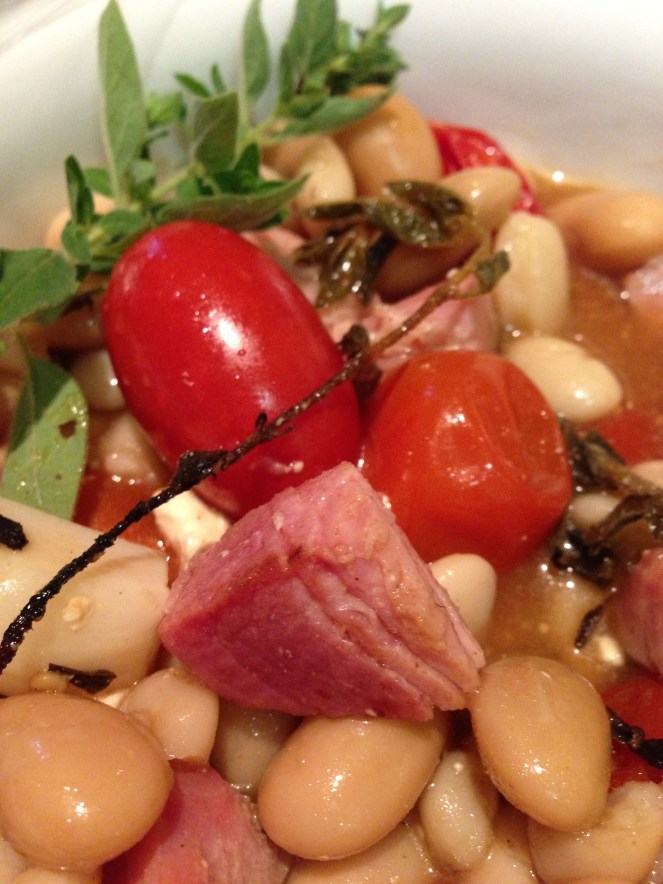
slow roasted beans

By this stage of the season, simple is the adjective we reach for when thoughts turn to the day’s upcoming menu.

On recent supermarket visits, I notice basic items – the likes of yoghurt, eggs and honest loaves returning to people’s trolleys in an attempt to restore equilibrium after lavish seasonal feasting. Lovely as it is to enjoy the spoils of Christmas, we eventually seek out the familiar constituents our system and soul relies upon throughout the mainstay of the year.

Delectable leftovers must not be ignored either – so constructing a meal that incorporates feast remnants in a toned-down fashion, is the aim. Our succulent ham, after featuring as the celebration table hero, took a backseat to some lovely baby tomatoes and the pantry staple – beans. Here’s how it went:

750g small tomatoes
bulb of garlic separated into individually peeled cloves
200g chopped ham of the bone (small chunks, not thin slices)
salt and pepper
2 cans of beans (butter, cannellini or whatever you prefer) drained and rinsed
1/2cup chicken or vege stock
small bunch of oregano sprigs
feta cheese to serve

Place tomatoes, garlic and ham in a roasting pan, and cook for 30 minutes in a 180 degree celsius oven for 30 minutes. Season with pepper and a little salt. Once the tomatoes are shrivelling and the ham has crisped a little, add the beans, stock and oregano and cook for a further 10-15 minutes. Remove from oven and crumble feta over the top. Serve with warmed pita bread.

pita beans hamPostscript:Ham still in plentiful supply, any further suggestions welcome…


recipes

steamed

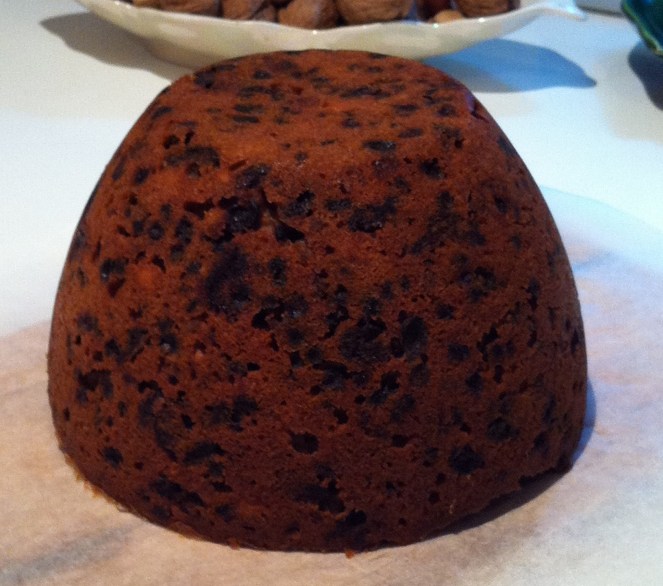
christmas pudding

Whether you make your pudding the night before or three months earlier, it’s going to taste wonderful – because you made it from scratch.

Like sound child rearing, a pudding needs you to be around. You needn’t hover, but it’s vital to be in the background for times when a gentle water top up (nurturing) or a watchful eye (safe-keeping) is required. Don’t think of pudding day as a tie, but rather an opportunity to consolidate and take respite from the hectic lead up – to Christmas.

You can soak the fruit for as long as you like, provided the bowl is covered or sealed – so essentially, it is done in two stages. Once cooked, your wrapped pudding will last for eons – I often make two so we are enjoying the spoils mid-winter.

It’s possible I have experimented with at least twenty recipe versions over the years, but this one has become the favorite. I hope it becomes yours too.

250g sultanas
250g raisins
250g currants
60g mixed peel
handful of glace cherries, halved
125g blanched almonds, chopped
1/2 cup brandy
250g butter
11/4 cups brown sugar
grated rind of 1 orange
4 eggs
1 cup plain flour
1tspn mixed spice
1tspn ground ginger
125g fresh breadcrumbs

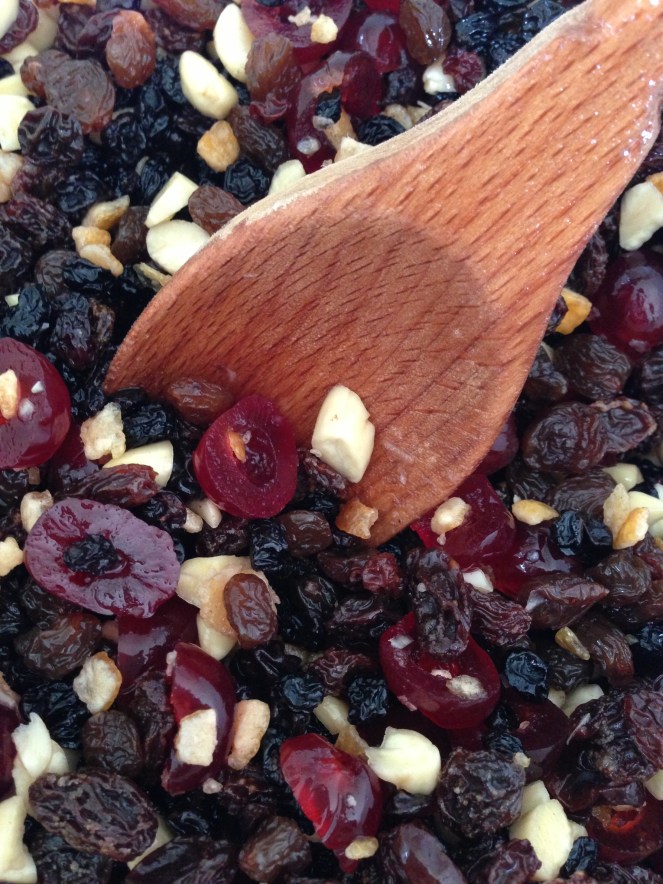
  1. Combine fruit and nuts in a large bowl and pour over brandy. Leave overnight, covered.
  2. Cream butter, add sugar and rind and beat until light and fluffy.
  3. Add eggs, one at a time, beating well after each addition.
  4. Stir through sifted flour and spices.
  5. Stir through breadcrumbs and fruit mix until everything is well mixed.
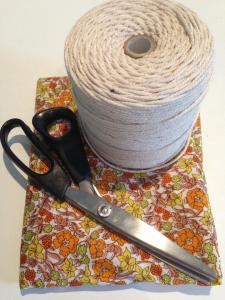
  6. Grease an 8 cup capacity pudding basin and line the base with greased baking paper. Spoon in the pudding mixture. Cover the top with a circle of baking paper. Wrap a sheet of baking paper over the top of the basin and secure tightly around the rim with twine. Make sure the paper has a pleat through the centre to allow for the pudding as it rises.
  7. Place the basin gently into a large pot of boiling water, with enough water that it comes halfway up the side of the basin. (To stop the pudding burning on the base, place an upturned saucer on the bottom of the pot and stand the basin on it.) Cover the pot and let the pudding steam for 6 hours. You will need to check the water level frequently, and top up with boiling water from the kettle when required to keep the level.
  8. When cooked, let pudding completely cool, turn out of the basin and wrap in cling wrap. Store in refrigerator until required.

pudding fruit mix

recipes

Crunch

Chocolate almond cookies

Done with shopping? Me too. The last of my gifts are coming from the peace and solitude of the kitchen, sans parking lots, harried faces and never-ending landfill.

These cookies epitomise pure cooking escapism – easy to prepare, high yielding and incredibly toothsome (love that word, it sounds like a descriptor that would horrify a dentist). Depending on how reasonably stocked your pantry is, you may not even need to leave the house to get your batches underway.

And just to give you that little extra bang for your baking buck, the mix can be rolled into half-size balls, for twice the output. Put a couple of choc chips on top as soon as they are lifted from the oven and you will end up with at least 30 of these:

chip-topped cookies

Start with the almond topped ones, or build on this mix and design your own.

125g softened butter
½ cup brown sugar
⅓ cup caster sugar
1 egg
1 teaspoon vanilla
1½ cups self-raising flour
½ cup cocoa
¾ cup dark chocolate chips
almonds to decorate

  1. Preheat oven to 160°C.
  2. Cream butter and sugar until light and fluffy.
  3. Beat in egg and vanilla.
  4. Stir in flour and cocoa, then fold through chocolate chips. (The mix will be quite stiff)
  5. Roll tablespoonfuls into balls and place on greased baking trays. Flatten slightly with fingers.
  6. Bake for 15 minutes or until cooked. Cool on a wire rack. (makes about 20)

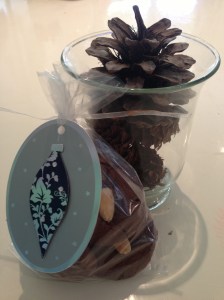
Postscript: If you have some bags and left over tags, you’ve got something to hand to your colleagues or neighbours over the next few days.

cookie bags

recipes

Jam

apricot jam

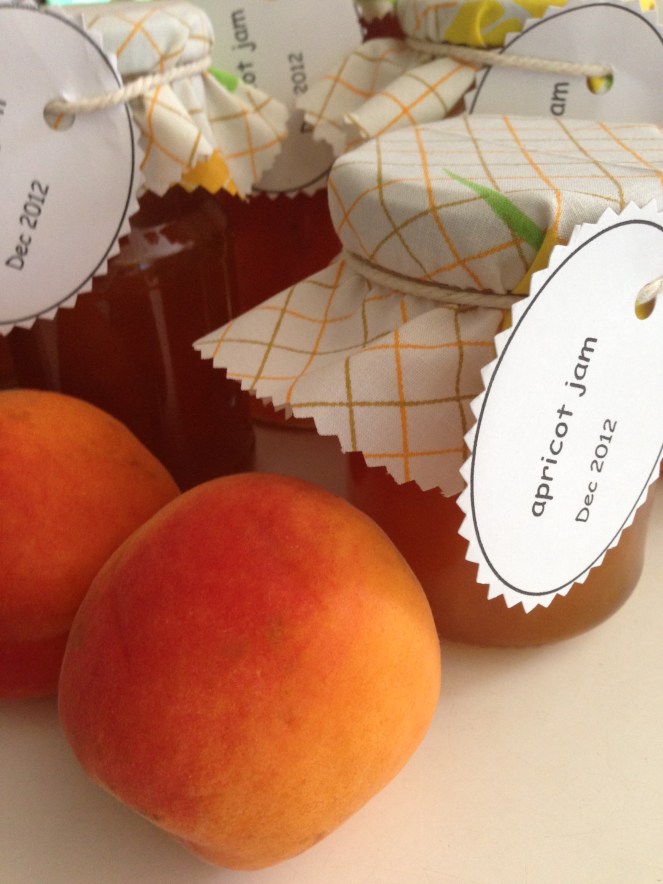
Tell me who’s going to pass by firm ripe apricots at the market for $1.99 per kilo? Not me, and therefore the kitchen has a distinct aroma of stone fruit about it this week.

Spread (thickly) on toast or dolloped over some creamy yoghurt and muesli, apricot jam happens to be one of life’s little pleasures. With the current prices and the jam sugar I mentioned here, there is no reason why you cannot have a pantry shelf full of it either.

As I was stirring the pot, I noticed one of the ‘feature’ tiles in the splashback and it made me smile.

kitchen tile

I must have cleaned and moved past this tile at least a million times, and today the realisation that an apricot keeps watch over the cooktop, came to be. How often are we looking but never really see?

If you would like to get your jars full this week, use the same recipe as I did for the White Peach Jam. Of course you will have to move quickly, because fresh apricots disappear quickly if like me, you live with a group of fruit bats…

apricot jam and apricot

gardening · recipes

Beet

silverbeet

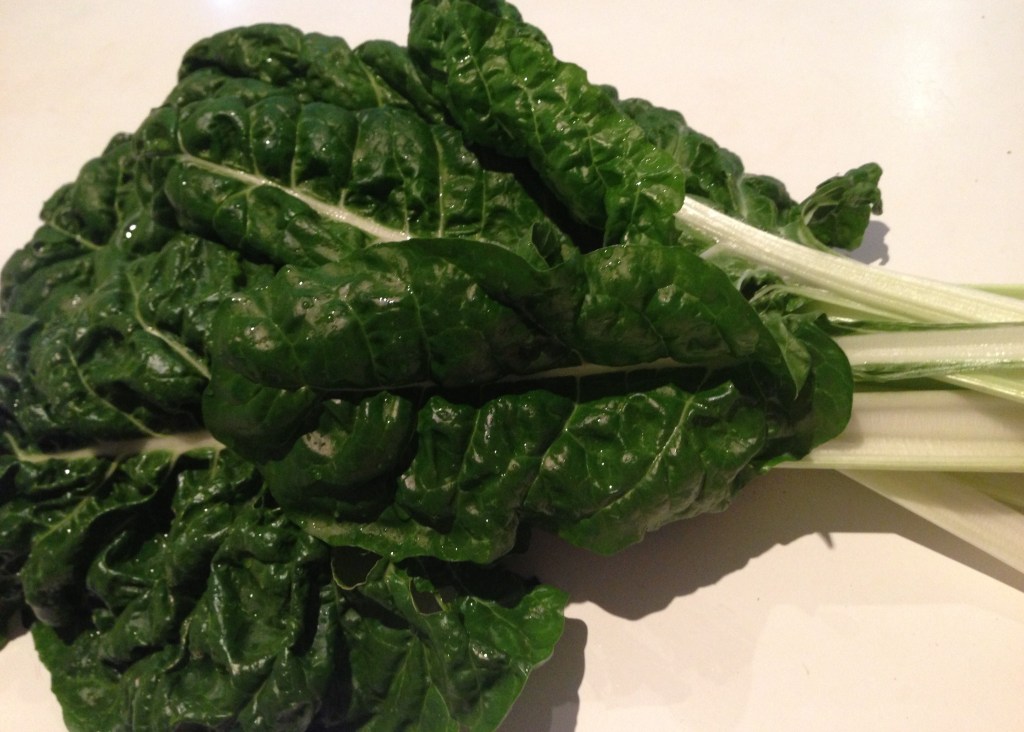
Just the appearance of a bunch of silverbeet radiates clues to its goodness. The squeaky, glossy generous foliage spells out in no uncertain terms, the abundance of goodness it contains. Alive with little packets of chloroplasts, the bunch almost seems to vibrate before your eyes.

Silverbeet is a pleasure to grow in the vegetable patch. Looking lustrous and leafy, the gardener’s horticultural self-esteem is given a hefty boost. Stalks can be sliced off at will, without the need to remove the entire plant leaving an ugly bald spot behind. New leaves will continue to sprout and according to ‘silverbeet experts’ these are the finest for culinary purposes. I let mine over grow for effect.

silverbeet patch

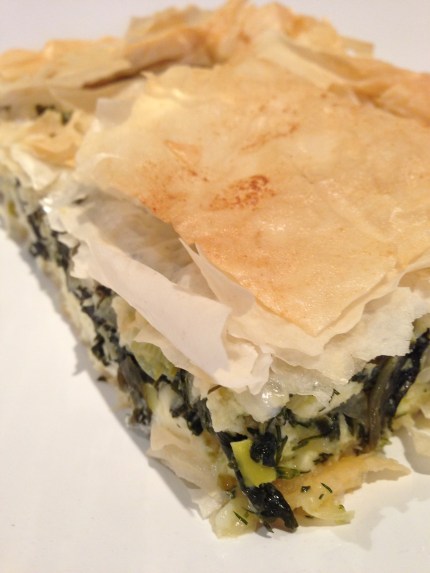
This week, a large bunch was harvested and sent across to a willing neighbour. To my delight, this is what we received in return, still warm.

spanakopita

Spanakopita.

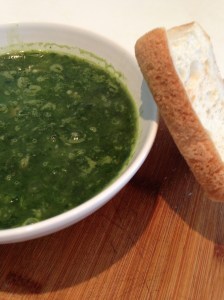
While the crop is plentiful, it’s nice to seek out new ways to incorporate silverbeet into our weekly intake. This year, I happened upon this simple soup, which is light enough for lunch in the warmer weather.

olive oil
1 onion finely chopped
2 cloves garlic, finely chopped
1 thumb sized piece of ginger, peeled and finely chopped
3 rashers of bacon, diced
bunch of silverbeet, stems removed and greenery shredded
1 litre chicken stock
salt and pepper to season

  1. Heat oil in large pot and gently fry off onion, garlic, ginger and bacon until cooked through.
  2. Add silverbeet and cook down for about 5-10 minutes until wilted.
  3. Pour over chicken stock and bring to the boil. Turn heat down and simmer for 10 minutes.
  4. Puree with stick blender.
  5. Season with salt and pepper.

silverbeet soupPostscript: Always happy to learn new ways with these leaves. If you have tips, please share!

recipes

Chorizo

chorizo and olive pasta

A meal drawn together from store cupboard items, with a few fresh ingredients thrown in, is financially, nutritionally and palatably rewarding.

Think of all of the delicious treats that a deli offers, and you basically have the running sheet for this dish. With a couple of chorizo sausages on hand in the freezer and a healthy patch of parsley in the garden, this is my go to on a busy week night.

The crowing glory of this pasta pull-together is that is tastes even better after a night spent sealed up in the refrigerator. So prepare it the night before, and just as you land in the door on the following evening, right before it’s time to drive away again for the night shuttle service, a sumptuous meal awaits.

300g penne pasta (or whatever is you prefer/have on hand)
olive oil
2 chorizo sausages, sliced
1/2 jar sun-dried tomatoes, sliced into strips
handful pitted black olives, sliced in half
8 cherry tomatoes, sliced in half
small block of feta
generous bunch of continental parsley, chopped
sea salt and cracked black pepper

  1. Fill a large pot with salted hot water and bring to the boil. Add pasta and cook according to instructions on pack.
  2. Meanwhile add a dash of olive oil to a large frying pan and brown the chorizo on both sides.
  3. Add all of the remaining ingredients and pan fry for 5-10 minutes, with a liberal dousing of olive oil. Season with salt and pepper.
  4. Drain pasta and return to pot. Add contents of frying pan to pasta and mix through. Crumble feta over the top and mix again.
  5. Serve with extra parsley as garnish.

Postscript: You’ll notice that the quantities in this recipe are a bit ‘loose’. This is how I construct it and I’m sure you will give it your own twist.

pasta sauce in the pan

recipes

Peachy

white peach jam

Preparing a batch of jam takes you into a bubbling, aromatic, peaceful world from which you emerge with the satisfaction of having turned the season’s finest into a delicious concoction to be enjoyed throughout the coming year.

Peach season is something we only dream about in the depths of a drizzly winter. To be able to capture some of this summer magic and bottle it for those bleak days, is a wonderful thing. White peaches seem to have a flavour unique to themselves and when they are still slightly tart, they produce beautiful jam.

Having recently discovered jam setting sugar, I am reluctant to return to the plain variety. It takes the guesswork out of the setting process, as the pectin is distributed through the sugar for you. If you only have regular sugar, use it and maybe toss in a couple of sachets of jam setting powder (available in supermarkets).

To sterilise your jars, rinse them and stand them in the oven with the lids off at 100 degrees celsius while you are preparing your jam. They can be filled, straight from the oven (with care).

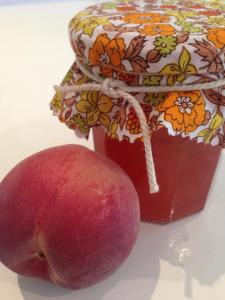
peach jam

1.6kg white peaches (or yellow if that’s all that is what you have)
1kg jam setting sugar
10g butter

  1. Make two long slits in the skin of each peach with a sharp knife. Pour boiling water over peaches and let stand until the skin begins to peel (about 10 minutes).
  2. Peel off skins, remove stone and chop peaches finely. Weigh chopped mix, you need 1kg.
  3. Add 1kg of chopped peaches to a large pot and add the sugar. Stir over low heat until the sugar has completely dissolved.
  4. Add the butter and increase heat. Bring to the boil without stirring.
  5. Allow to boil for 4 minutes. At this stage the jam should be set – test by spooning a small amount onto a saucer that has been chilled in the freezer. If it stiffens a little it is ready.
  6. Pour into hot, sterilised jars and seal immediately. Makes about 5 standard jars.

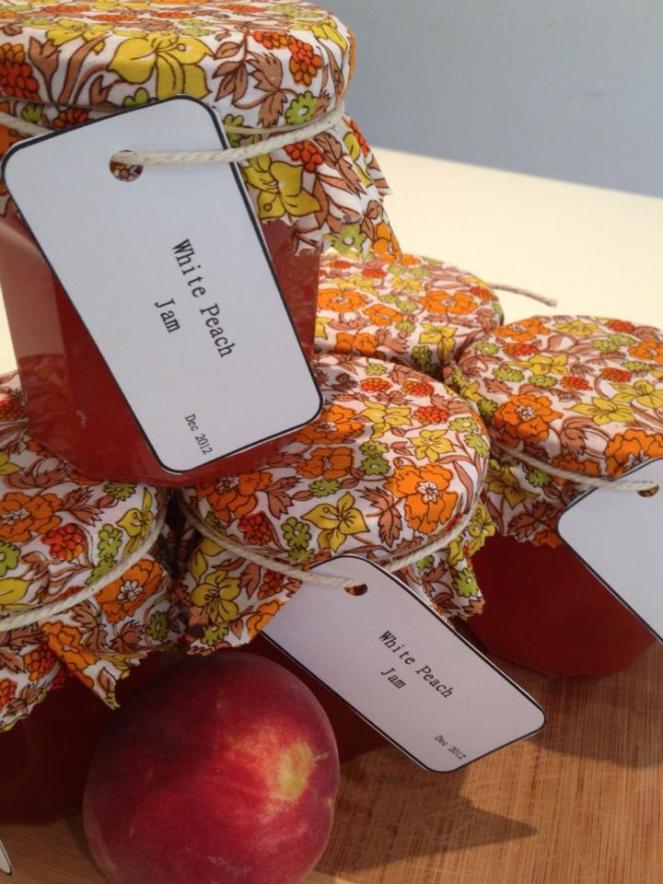
Postscript: If you have time, package your jars with some fabric hats and paper labels – with christmas around the corner, they make a lovely gift.

jam labeling

recipes

Upside-down

If you can find a recipe that allows you to switch the ingredients according to what you have, you prefer or is seasonal, then I’d say you have a keeper.

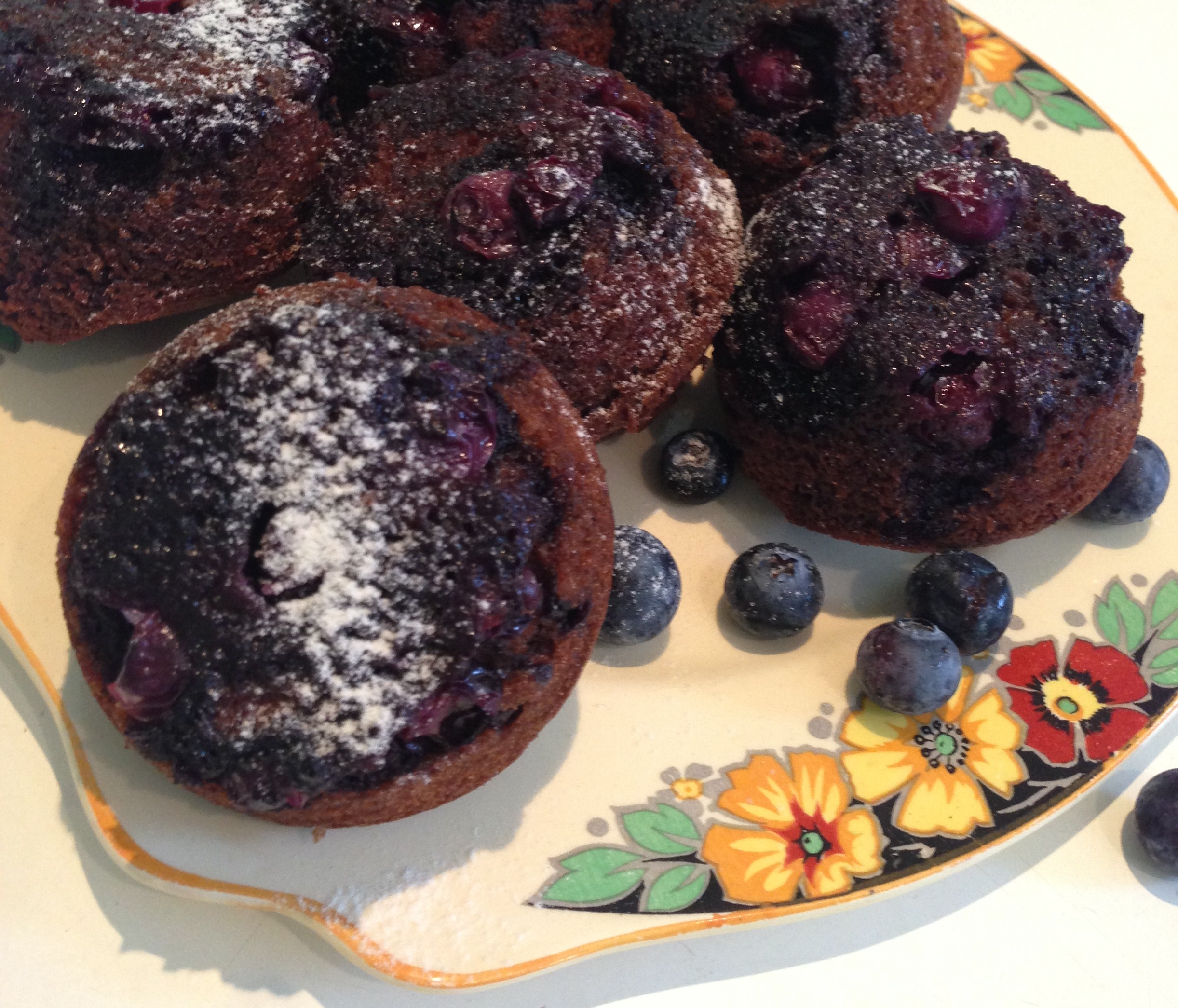
These little upside-down cakes fit that profile perfectly. Blueberries too pricey? Replace with strawberry halves. Don’t like chocolate (what!!!) then use this butter patty cake recipe instead. The bottom line is, you decide which fruit is going to feature and what flavour cake batter will be supporting it.

Apricot halves and peaches make a delicious base and as we have just launched into the stone fruit season, they are right at our fingertips. The tender baked fruit that becomes the topping of your cakes provides the moisture and sweetness that icing would normally account for.

For those who are explorers by nature, I’m sure you will come up with some startling combinations.

Over to you.

30g butter, melted
1 tbsp brown sugar
125g blueberries
125g butter, softened
¾ cup caster sugar
2 eggs, lightly beaten
1 teaspoon vanilla
11/4 cups SR flour
1/3 cup cocoa
2/3 cup milk

makes 12

  1. Distribute melted butter evenly between muffin tins. Sprinkle brown sugar over the base of each. Drop approximately seven blueberries into each hole.
  2. Cream the remaining butter and sugar together until light and fluffy. Add the eggs and vanilla and beat well. Fold in the sifted flour and cocoa alternately with the milk until combined.
  3. Spoon over the top of the blueberries.
  4. Bake in a moderate oven 160°C for 20 minutes or until cooked when tested. Cool before turning out of tins.

Postscript: Packet cake mix has come a long way in recent times. If you need these babies in a hurry, complete the fruit step and spoon the packet mix over the top.