recipes

Petal

When life gives you roses – make rose petal cakes.

We are seriously in danger of disappearing into a cloud of rose petals here, as for some climatic/random reason this season has been a bumper one for rose blooming. Not complaining.

They are such perfect specimens to observe and there are only so many vases you can place around the home. Cakes seemed the obvious next choice. If you have the time, rose petals can be dipped or painted with egg white and coated in sugar. Left to dry for an afternoon, they will become frosty little treats to plant on your icing before it sets.

If, like me, you are impatient, fresh is fine but best to lay to one side of the plate before plunging in – mouth first.

125g softened butter
3/4 cup caster sugar
1 tsp vanilla extract
2 eggs, beaten
2 cups SR flour (sifted)
2/3 cup milk

  1. Preheat oven to 180 degrees celsius. Place patty cases into muffin or patty cake tins.
  2. Beat the butter and sugar with electric beater until light and creamy.
  3. Add vanilla and eggs and beat well.
  4. Gradually add flour and milk alternately and mix gently until smooth.
  5. Spoon into paper cases and bake for 15-18 minutes until golden on top. Cool on a wire rack.
  6. When completely cold, top with icing and a rose petal. Makes 12

Icing
1 cup icing sugar
2 tbsp softened butter
tiny drop of red food coloring

Sift icing sugar and add butter. Beat until smooth. Add the tiniest drop of food coloring for a really soft pink. If the mix is a little stiff, add a few drops of water for spreading consistency.

recipes

Cookout

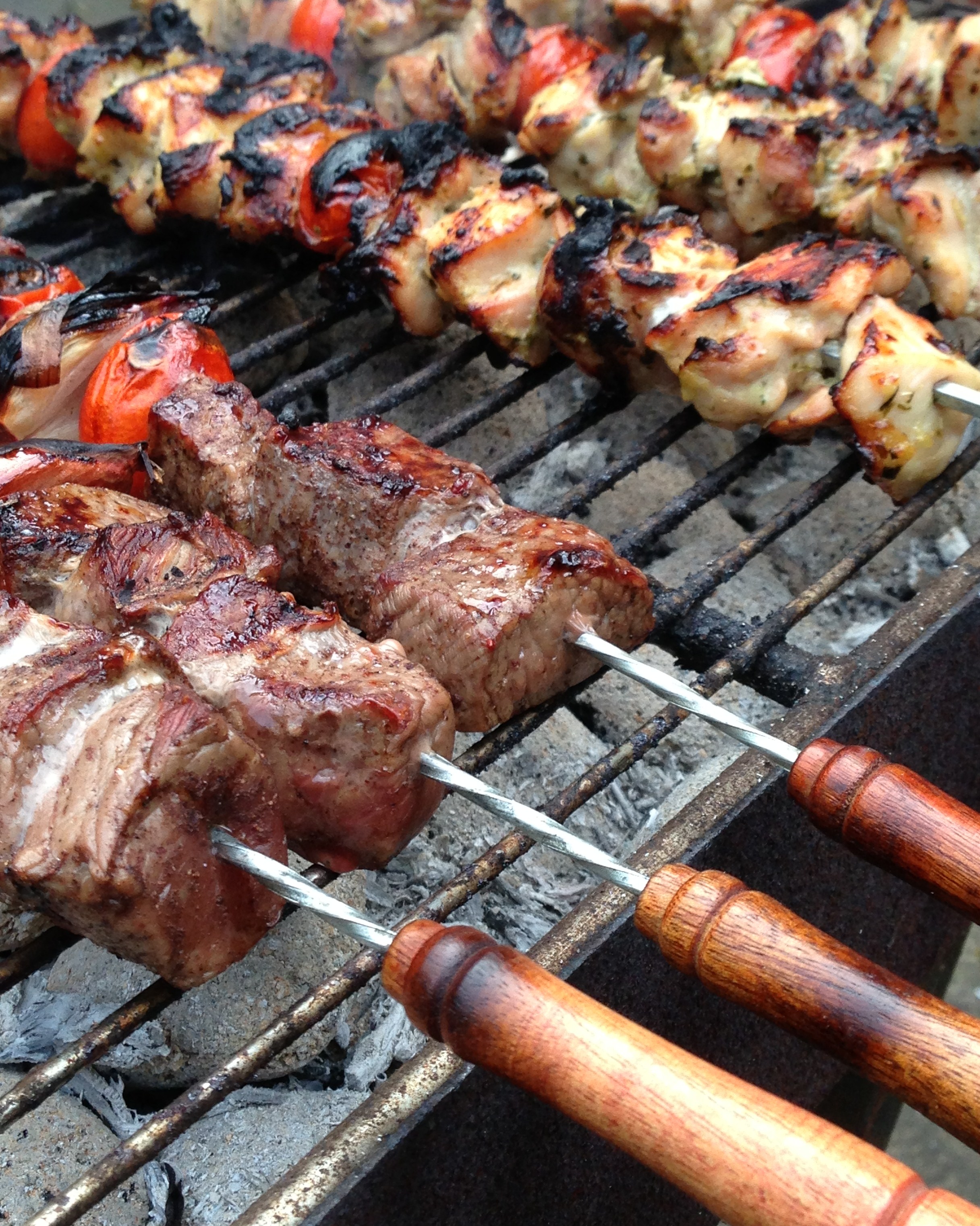
Against a backdrop of sizzling choice cuts, glowing coals and the occasional flare up as drips catch alight, channel your medieval ancestor and enjoy food prepared in the rudimentary way of days long past.

Our American cousins call it a cookout, and I think that is a brilliant term for our much-loved barbeque. To me, cookout implies that it’s all happening outside, everyone is involved and essentially, that’s what I love about a barbeque – the joint effort of a social group.

Barbequed food is usually served in its simplest form, relying on basic herbal ingredients and quality oil to carry it through the cooking process. While the fire is settling to its even layer of radiant coals, simple salads of fresh produce are arranged and condiments mixed. As the meat sears and crackles, there is ample time for relaxed conversation as cook and companions cluster at the source, intermittently turning and prodding as anecdotes and observations are exchanged.

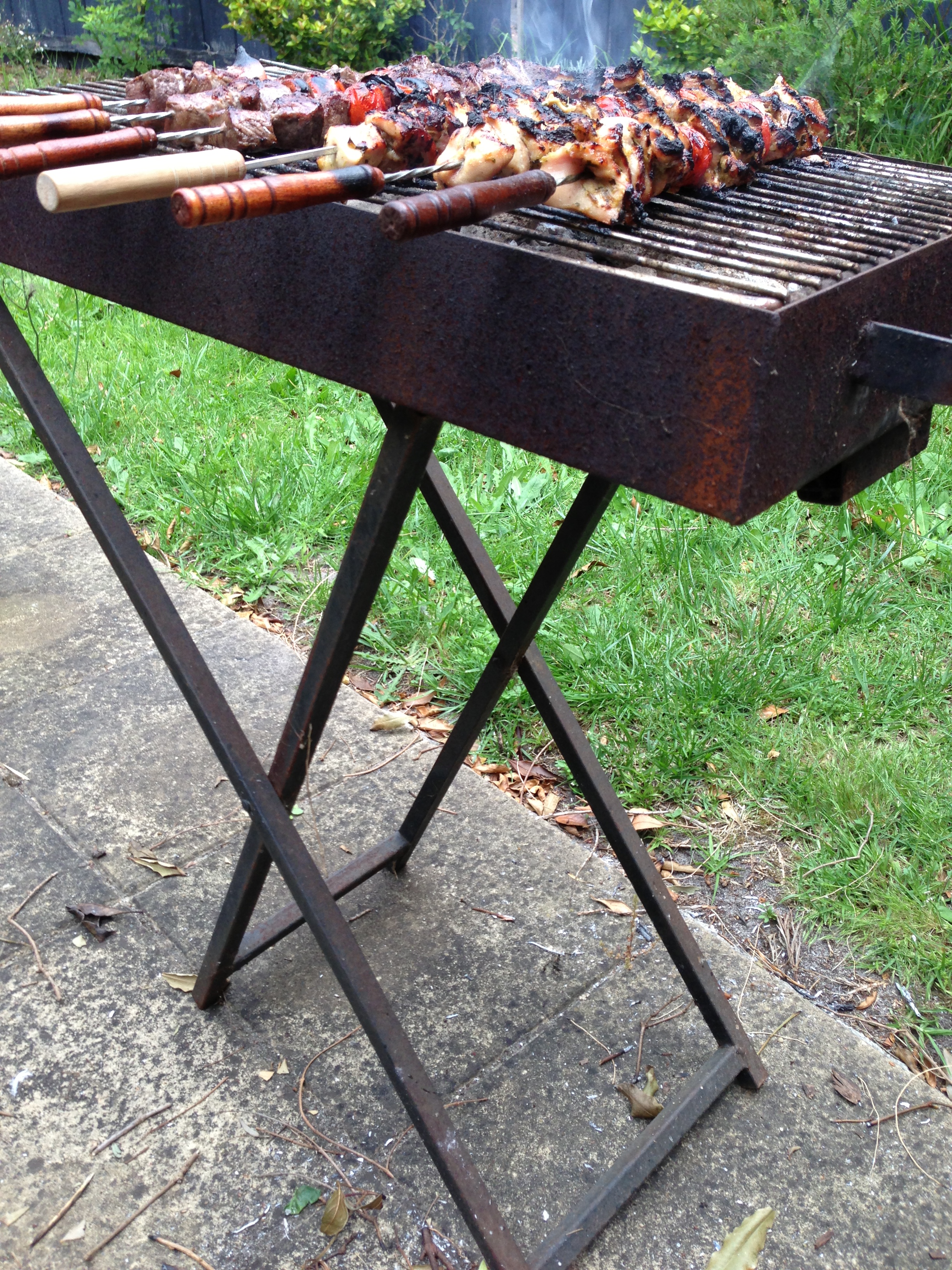
Our barbeque bears little resemblance to the sophisticated pieces of engineering that are available in stores today. Basically a coal box on a stand, this wood-fired lady has turned out a plentiful supply of succulent meat her in time. Gathering kindling from the yard and the neighbourhood  to fuel her has been part of the charm – especially for the youngest. If the weather changes its mind, she is carried undercover very easily.

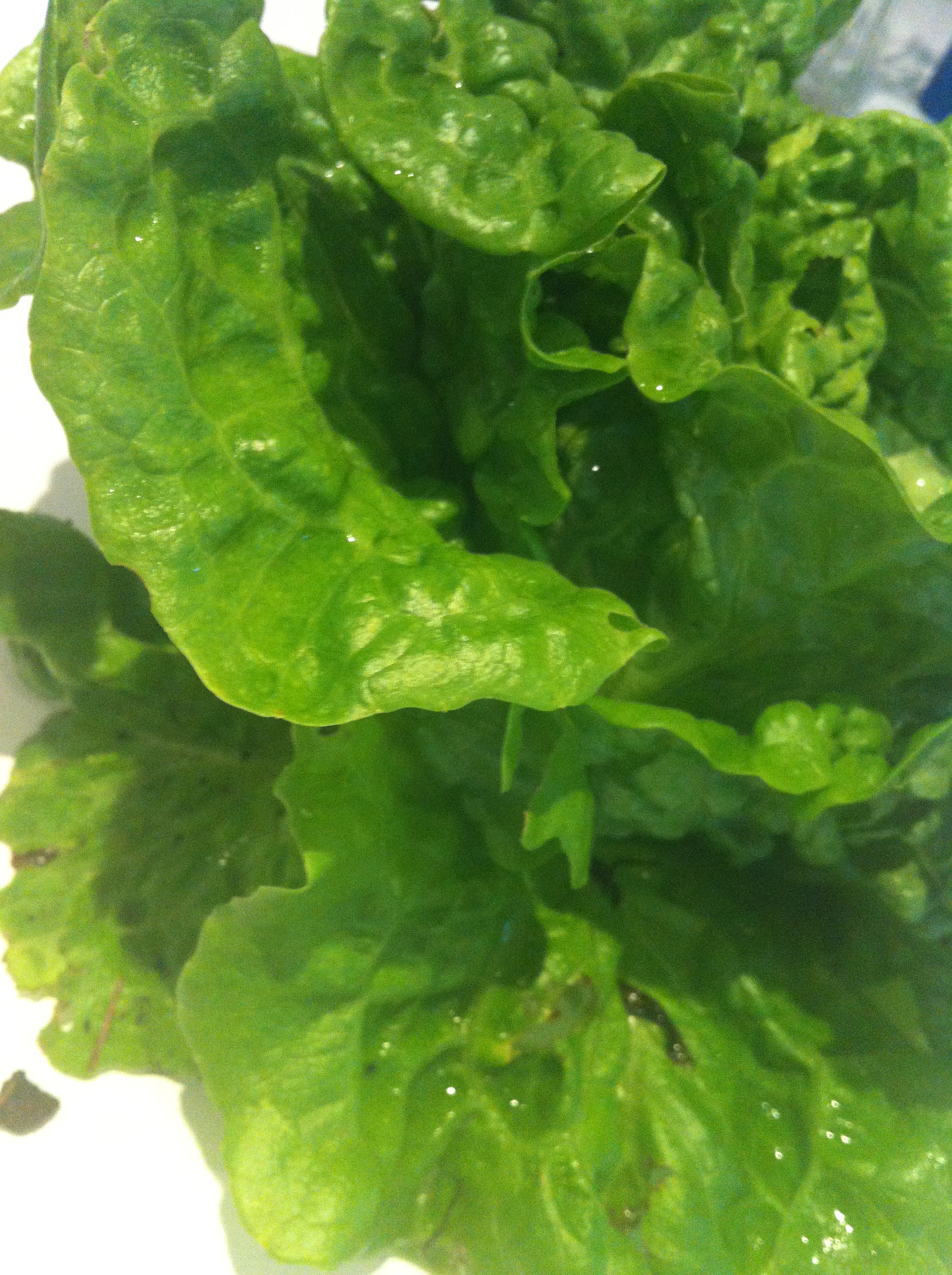
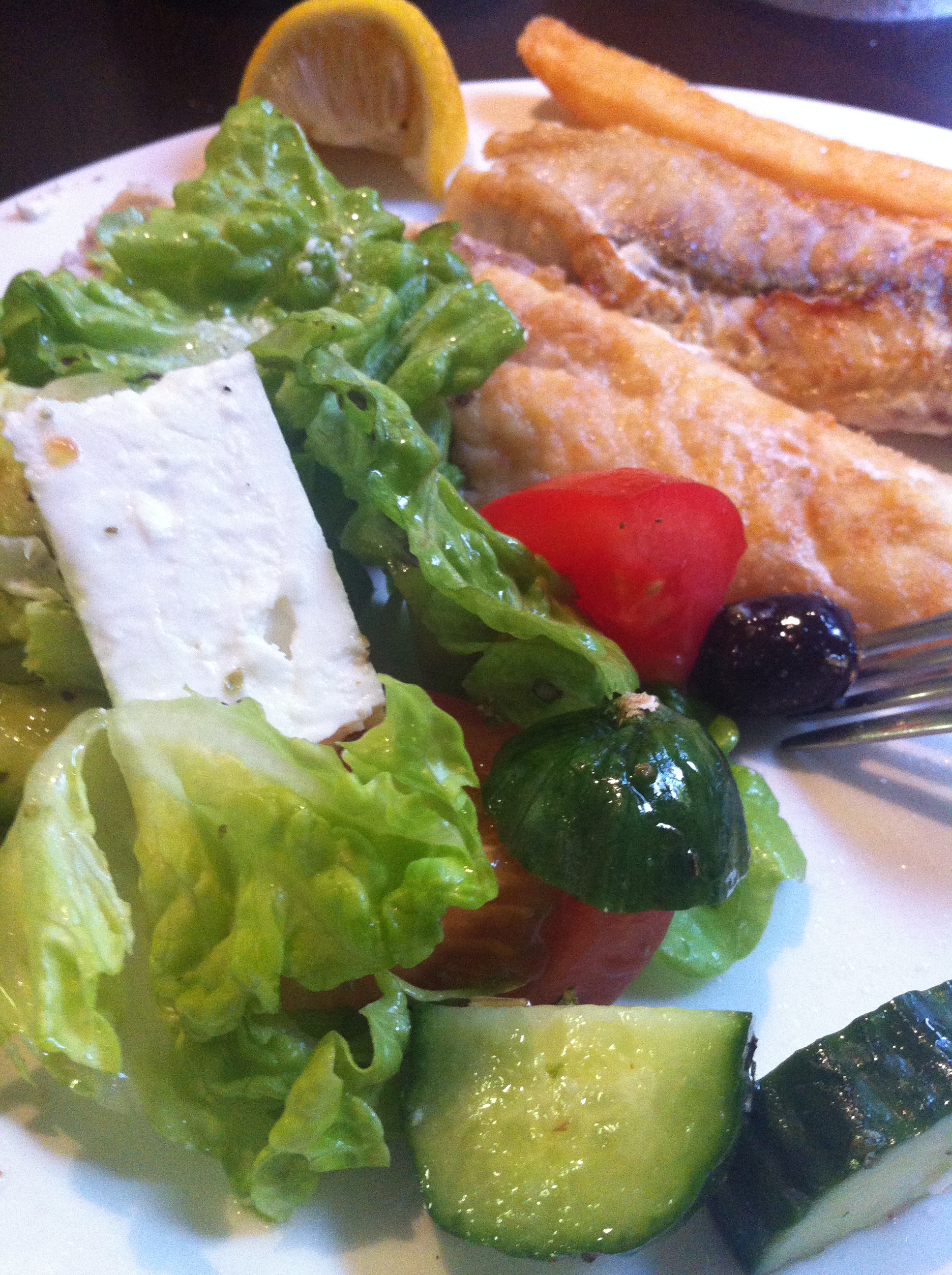
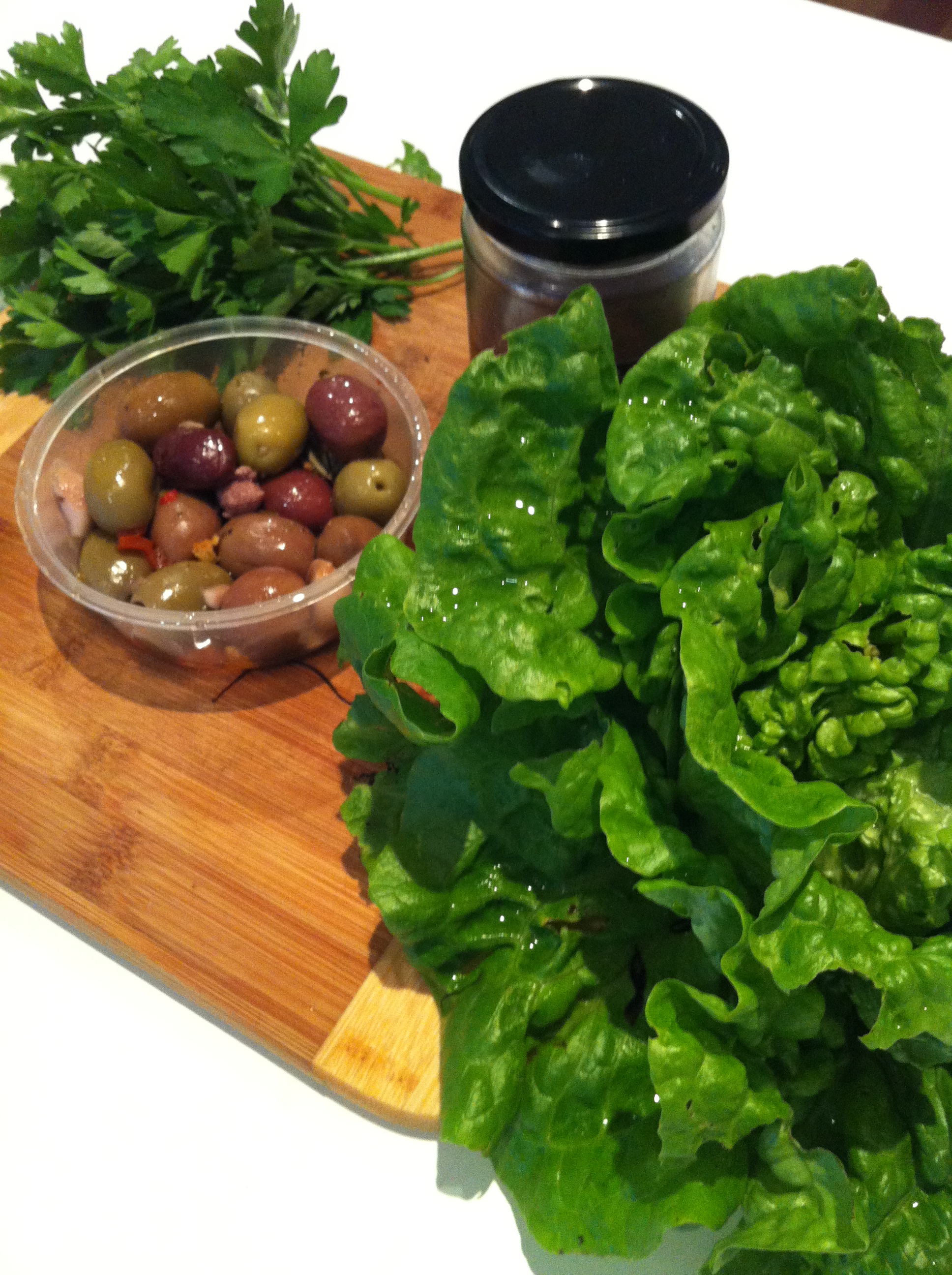
We thread our big metal sticks with marinated meat (in this case, chicken and lamb with crushed coriander, garlic and basil) in dispersed with seasonal small vegetable pieces. This week we opted for our usual salad of cos, olives, tomato and feta (sprinkled liberally with oregano), dressed with oil and lemon juice.

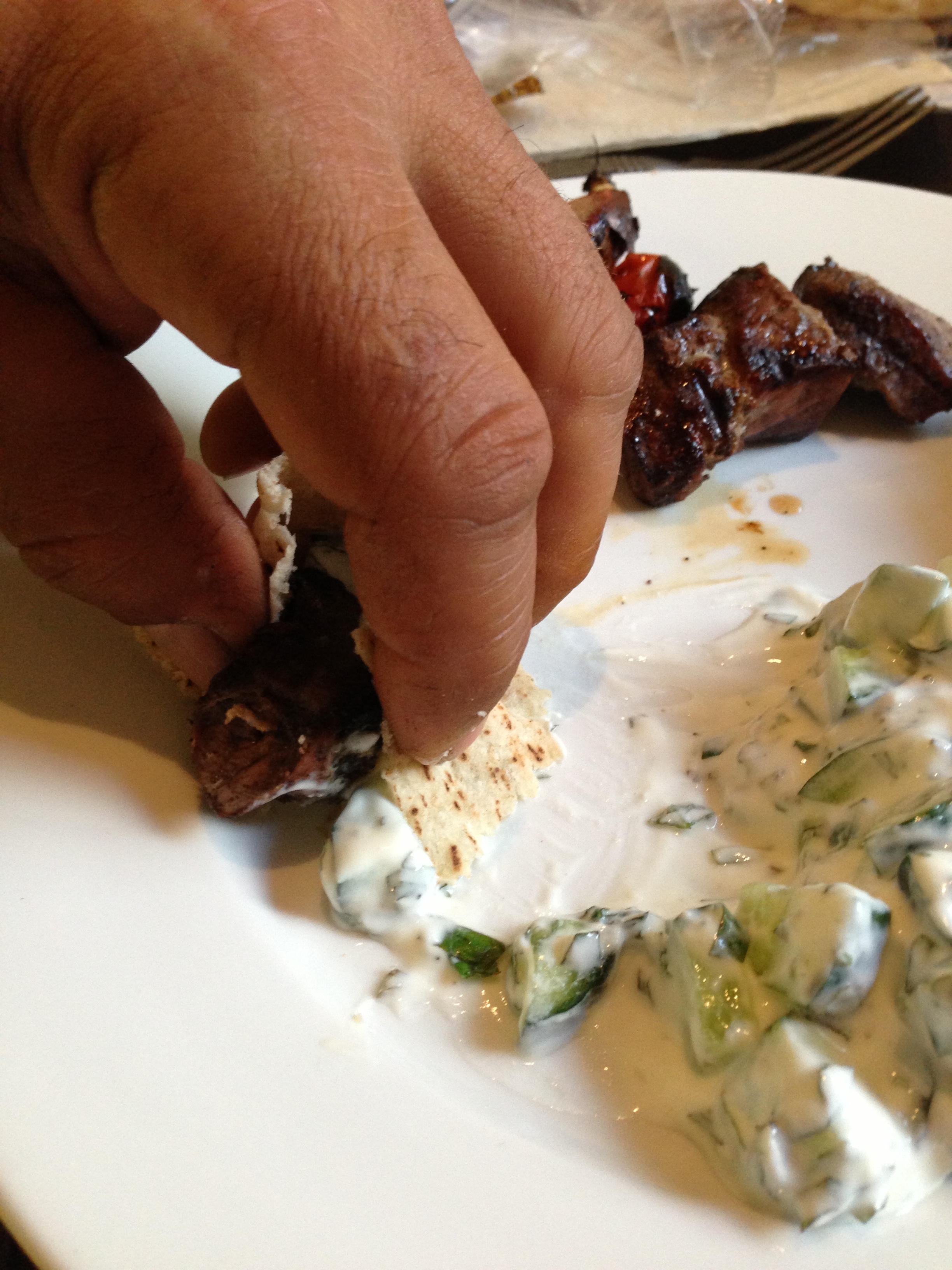
Before enclosing an unthreaded morsel inside a piece of fresh flat bread, a dollop of yoghurt, cucumber and mint dip is doused over the top. All food groups covered, all appetites sated and a meal consumed in a tribal rather than nuclear convention.

gardening · recipes

Leaves

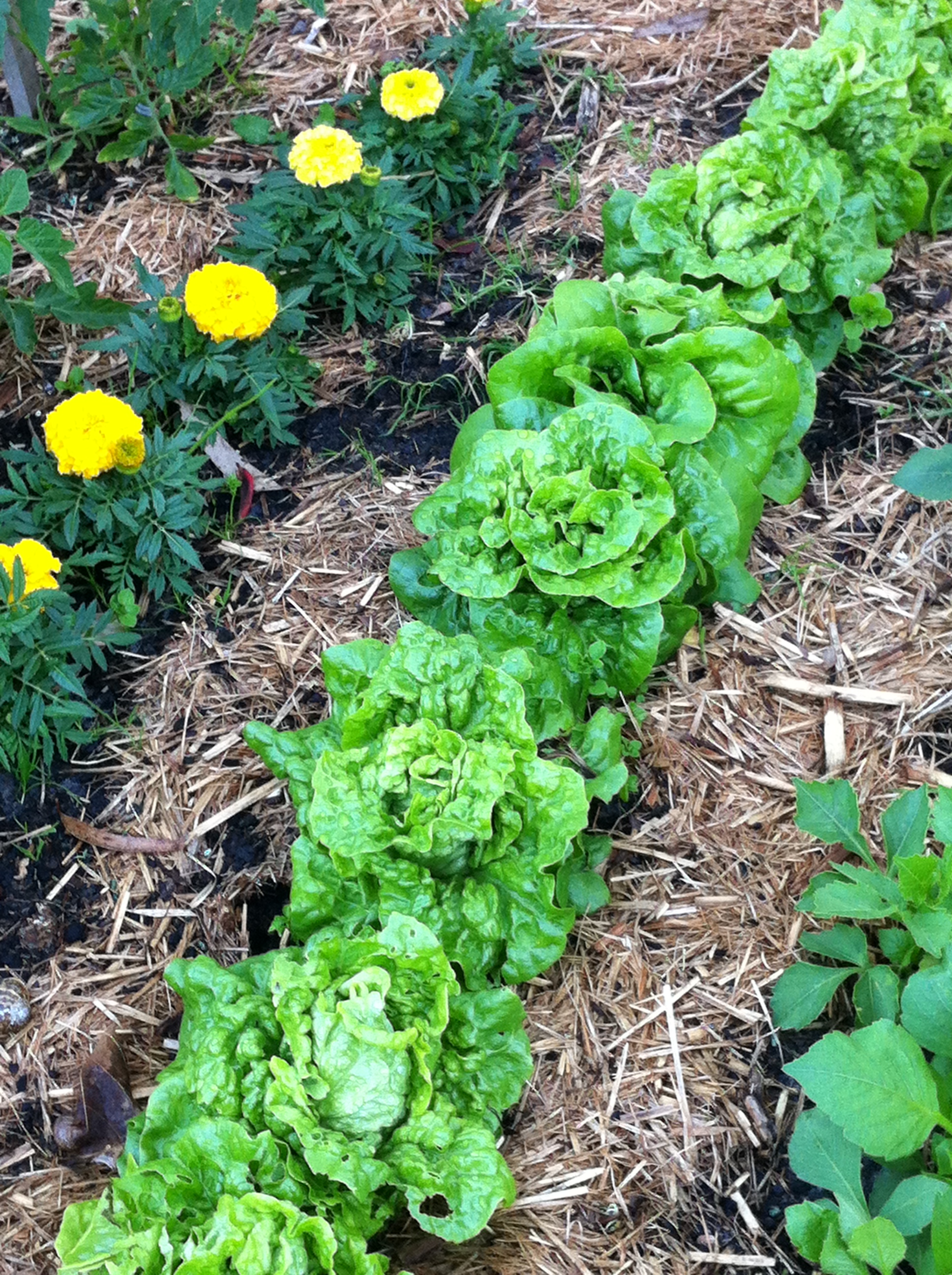
If you consider yourself an entry-level gardener, then you simply cannot go wrong by kick-starting your vegetable plot with a row of verdant lettuce.

When tomatoes are barely flowering and beans are just beginning to wrap their tendrils around the rungs of their frame, at least that lovely row of lettuce seedlings that were planted at the very same time (all those weeks ago) have produced a satisfying harvest. This is my gardening impatience coming to the fore, when after daily watering and nurturing, there does not seem to be proportional output from the plot. If a lettuce can be brought to the table in the early phase of the season, that is sufficient to stave off any disquiet and fuel expectancy for the next plants to yield.

Given plenty of water, sunlight and some fertile earth, lettuce, no matter what the variety, is a sure-fire way to build a budding gardener’s confidence. For those who simply cannot wait for their crop to reach maturity, there can be sneaky snips of external leaves, to be brought inside for last-minute salads or into the lunchtime rolls. This actually encourages growth.

To keep a ready supply of lettuce, when the first row have reached adolescence, start off a second row of babies. By the time the adolescents are adult cropping size, your third row of babies can go in. This way, you will have lettuce for your brood and that of every neighbour in your street. Passing surplus vegetables onto friends and neighbours is every bit as rewarding as harvesting for yourself.

In a perfect world, everything on our plate would be grown in our backyard, but that world isn’t quite the one we inhabit right now. However, if you can sit down to a meal with at least one constituent, whose only footprint was rendered from your muddy gumboot, then that is coming close enough in my book.

Postscript: Our mignonettes have all been consumed now, and we are about to start on some crispy icebergs. Had thoughts of a caesar salad the other day, so Cos might have to be next.

recipes

Pud

Ostensibly a batter, it is quite remarkable what the contribution of a tray (or two) of yorkshire puddings will make to a succulent roast of beef – with all of the usual trimmings alongside.

In response to a carnivorously deprived teen, recently returned from a Fijian school trip, having existed largely on noodles and yam for two weeks – roast beef became the order of the day. To accompany it, without question, a mountain of yorkshire puddings.

Of the selection of roasted proteins, beef was my childhood favorite, as I grew up with a mother who would never consider serving it without yorkshire pudding. This culinary custom stemmed even further back to my grandmother, who turned out roast beef from a wood stove – her pudding rising to high peaks from the intense heat at the top of the oven (and I’m sure the eggs laid by the backyard chooks were also a contributing factor). She produced hers in a large oven tray and sliced it into wedges, whereas ours have evolved into puffy puds by pouring the mix into cake pans.

I use my old patty pans (which due to age and overuse are far too unsightly to photograph), but the current ones are fine. Big texas muffin tins will work, but you will need to fill them with extra oil and the batter won’t stretch very far. Look for the old patty tins – raid a relative’s kitchen cupboard – I’m sure thousands are out there waiting for their second life.

1 cup plain flour
pinch salt
2 eggs
1 cup (or so) of milk
olive oil

  1. Pre heat oven to 190 degrees celsius.
  2. Sift flour and salt into mixing bowl.
  3. Make a well in the centre and break in the eggs.
  4. Beat until egg is mixed in (all thick and lumpy).
  5. Gradually add milk, beating with a wooden spoon until lump free and is of pancake batter consistency. You may or may not need all of the milk. Let stand for the afternoon.
  6. Fill patty cake pans with 11/2 tspns olive oil. Place cake pans in the oven so oil is hot (10 minutes).
  7. Ladle batter into heated pans and bake in the oven for 10-15 minutes until risen and brown.
  8. Serve immediately smothered in gravy. Makes about 12.

recipes

Luscious

If you are ever unsure of the whereabouts of family members, you can guarantee that the wafts of  warm chocolately baking emitting from an oven of brownies will unearth them from locations near and far.

As if by sorcery, individuals within close proximity, who 15 minutes previously, could not hear you when you called for assistance with dish washing, suddenly appear in the kitchen with an interest to assist. Even those, riding bikes, at remote parts of the property, are lured in by the heady aroma of baked chocolate. No one is disappointed.

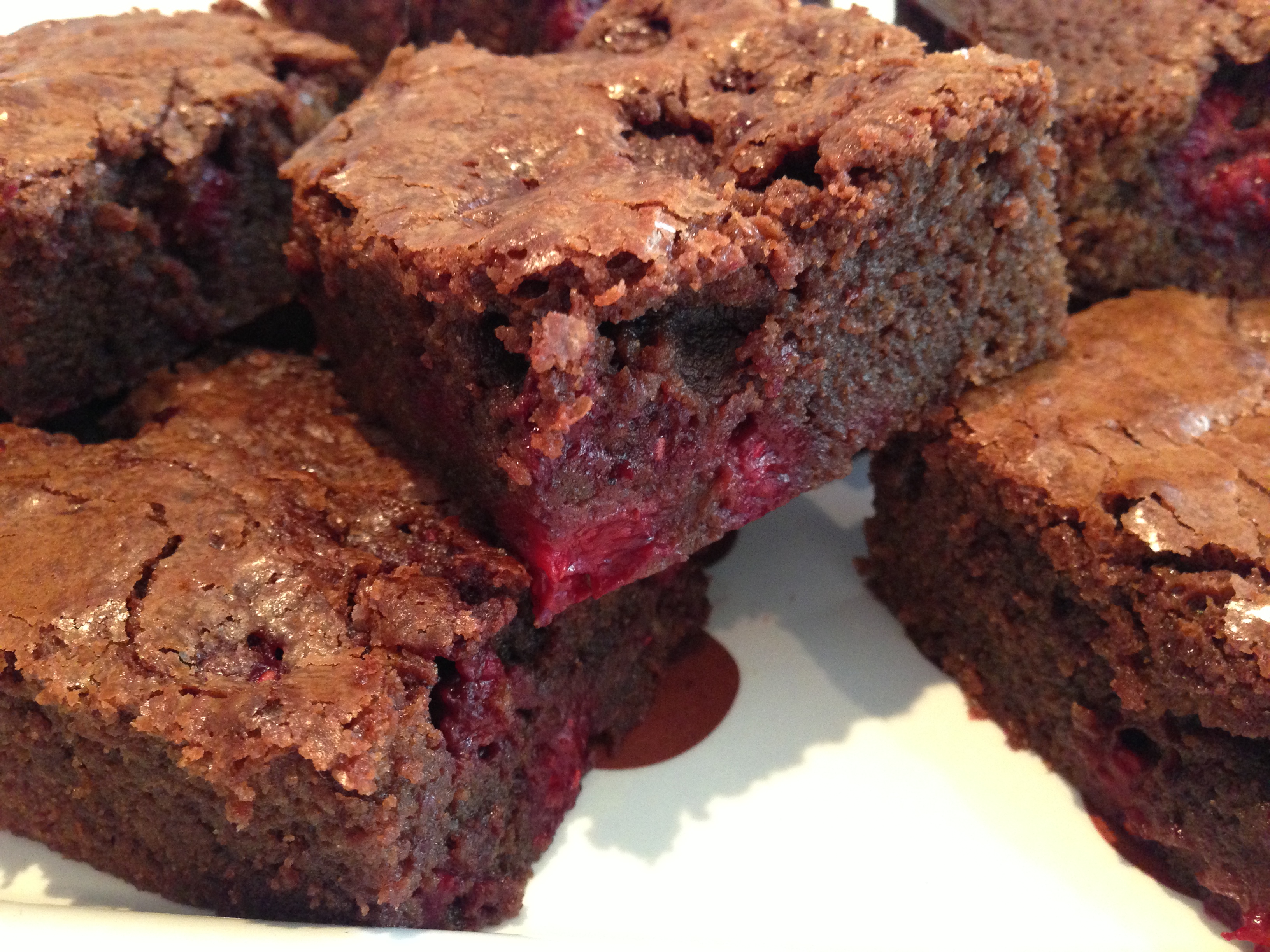
Taking inspiration from Frugal Feeding, who ingeniously added blueberries to his latest batch, I was prompted to defrost my much-loved raspberries and turn out yet another version of this irresistible treat – raspberry brownies. To ‘rattle out’ your own tray, follow this recipe (which is basically a brownie that I have made many times, with the addition of 150g of raspberries). If you have your own trusty standby, use it and add the same quantity of berries.

200g dark chocolate
150g butter
3 eggs, lightly beaten
175g brown sugar
75g plain flour
150g raspberries (if using frozen, thaw them well)

  1. Preheat oven to 180 degrees celsius. Grease and line a 20cm square pan with baking paper or you can use a rectangular pan of similar dimensions.
  2. Melt chocolate and butter in a saucepan over low heat until smooth. Cool for 5 minutes.
  3. In a mixing bowl, combine eggs, sugar and sifted flour. Mix well.
  4. Fold in the chocolate mixture and then stir through the raspberries.
  5. Pour into prepared pan and bake for 30-35 mins. Check earlier as all ovens cook at different speeds!
  6. Cool in the pan before cutting into approximately 12 squares. Delicious served just warm.

The more patient individuals in this household were able to enjoy their brownies for dessert, accompanied by vanilla ice-cream – in a bowl. Others gorged themselves straight from the cooling tray…

Postscript: I can’t help thinking, that Darby and Joan would have been much happier by their fireplace if they too could share in a piece of this brownie.

gardening · homemaking · recipes

Herbaceous

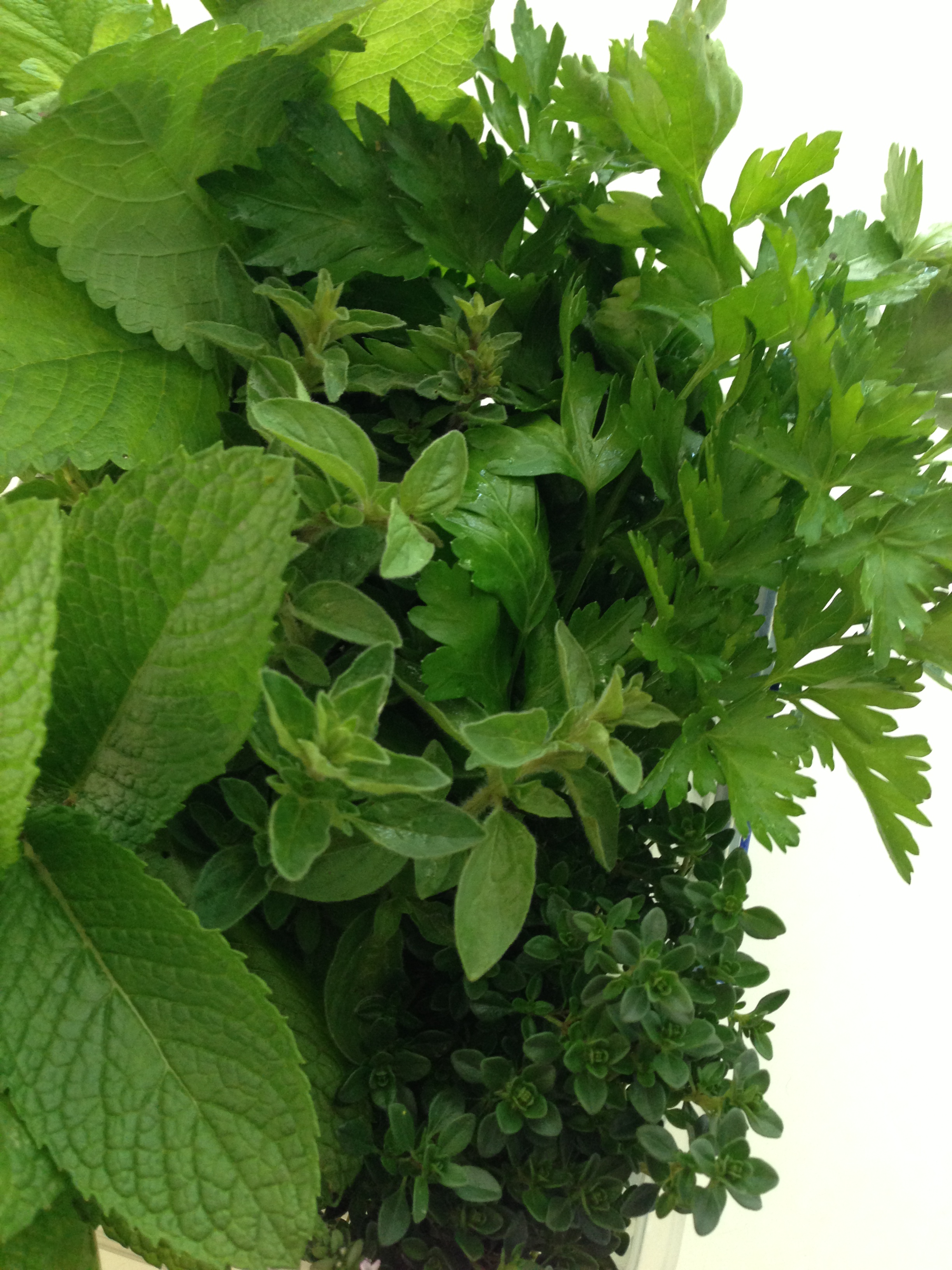
A freshly gathered bunch of herbs exudes every bit as much beauty as a posy of its floral relatives.

Aside from their culinary use, herbal cuttings serve as sturdy backdrops for floral arrangements – and providing the water is replenished, do so with incredible staying power. Their robust nature and depth of colour gives the floral heads prominance and easy positioning. Simple flowers such as nasturtiums, lavender and daisies are offset beautifully by rosemary and parsley. Dahlias and mint are another prime example:

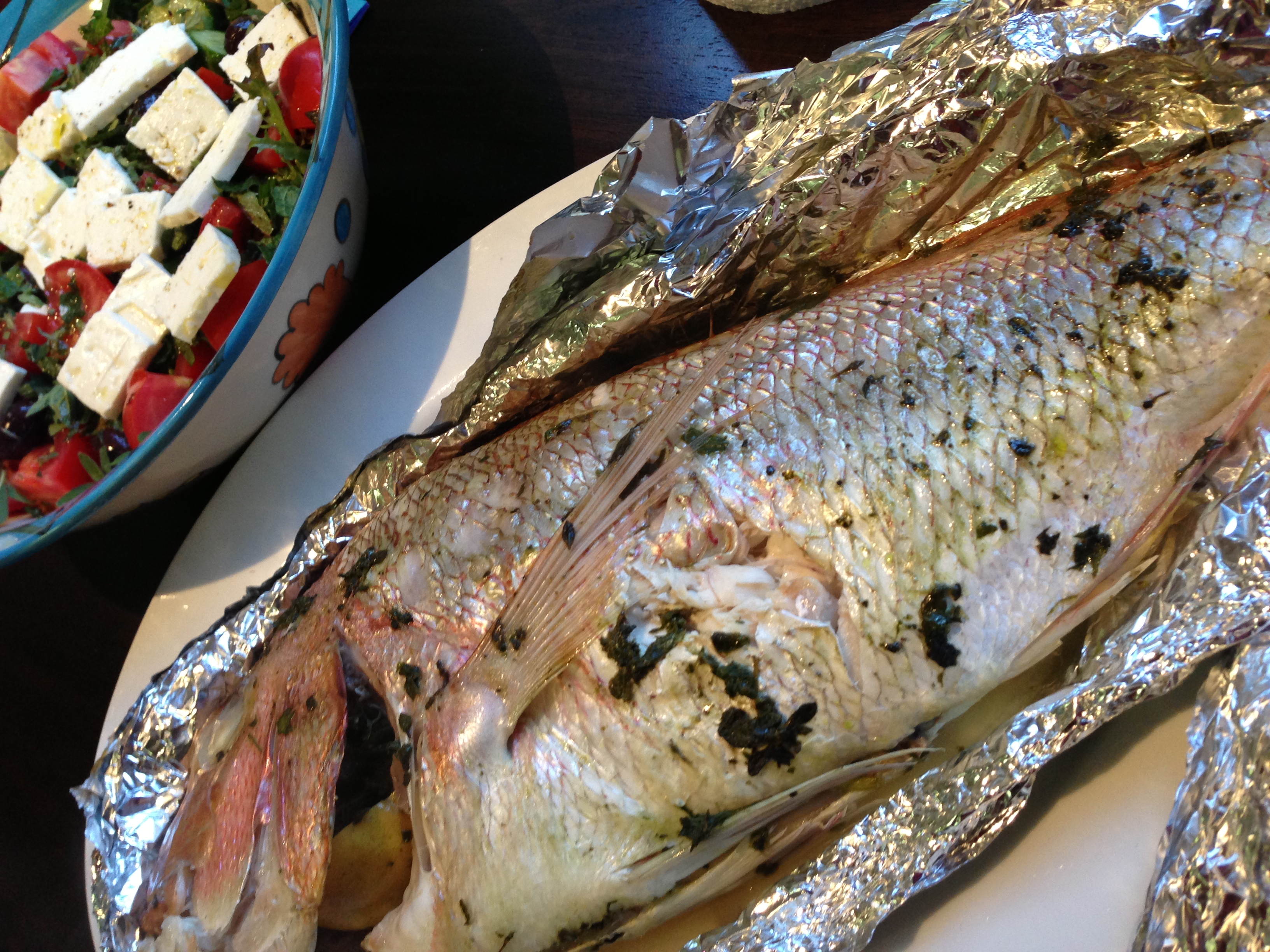
A collection of cuttings in the kitchen is refreshing to the eye and can be snipped at as recipes across the week call for sprigs, bunches and garnishes. Case in point, this week we were the fortunate recipients of a lovely fresh snapper, reeled in by a fishing acquaintance. After scoring the skin, we massaged the catch with olive oil and sea salt. The final rub down was a herbal concoction made in the pestle and mortar – oregano and thyme with a splash of olive oil to bind.

The fragrantly coated fish was then securely wrapped in foil and baked in a 180 degrees celsius oven for 45 minutes. The result, a lovely succulent fish served with a feta and olive salad. This is not a difficult exercise and if you have a good local fishmonger, you can have a nice fish feast on your table requiring little more that 10 minutes preparation plus cooking time (make the salad while it bakes).

Postscript: There is a combination of five different herbs pictured above – can you identify them all? Clue – see tags…

health and wellbeing · recipes

Crunch

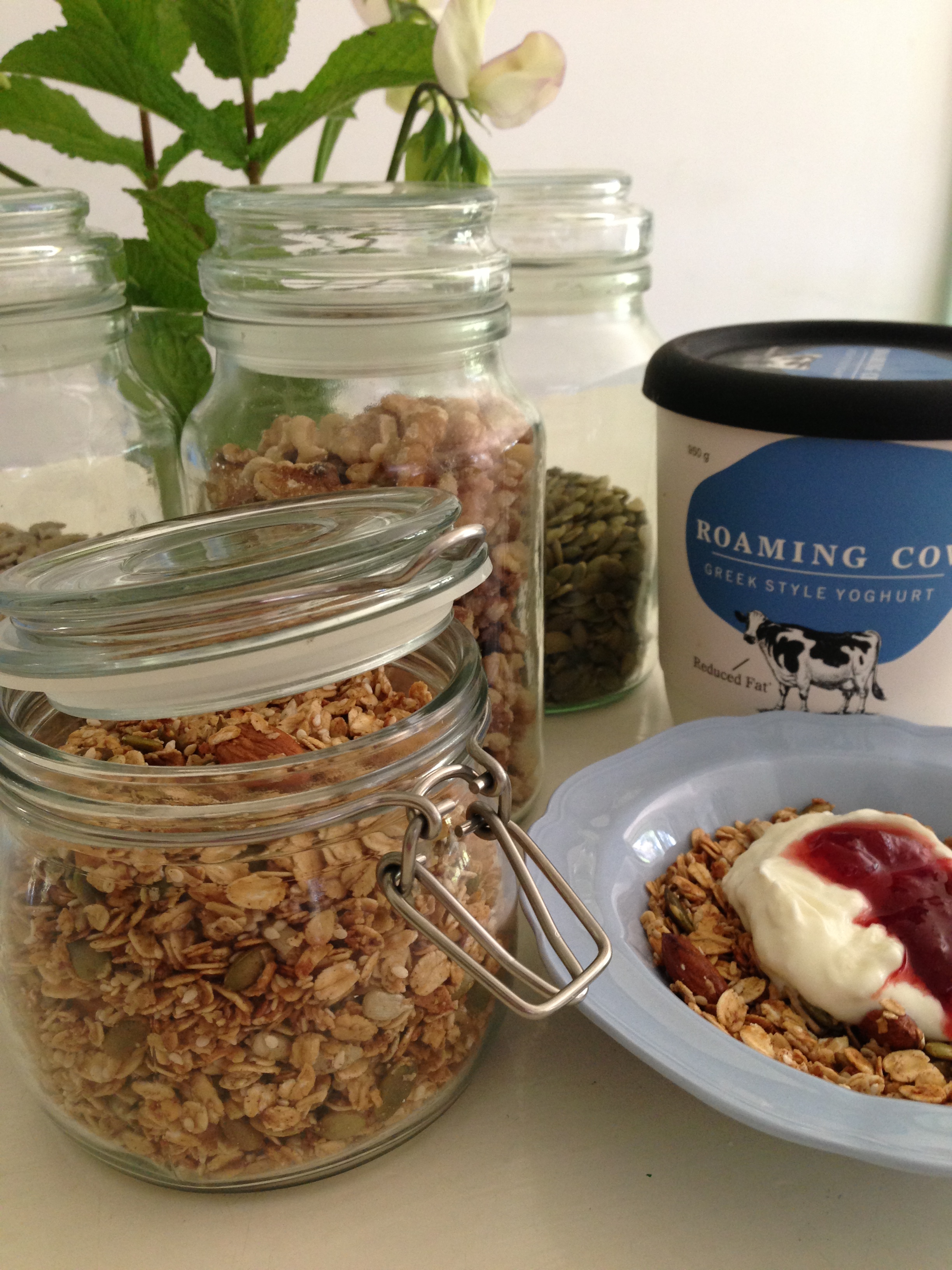
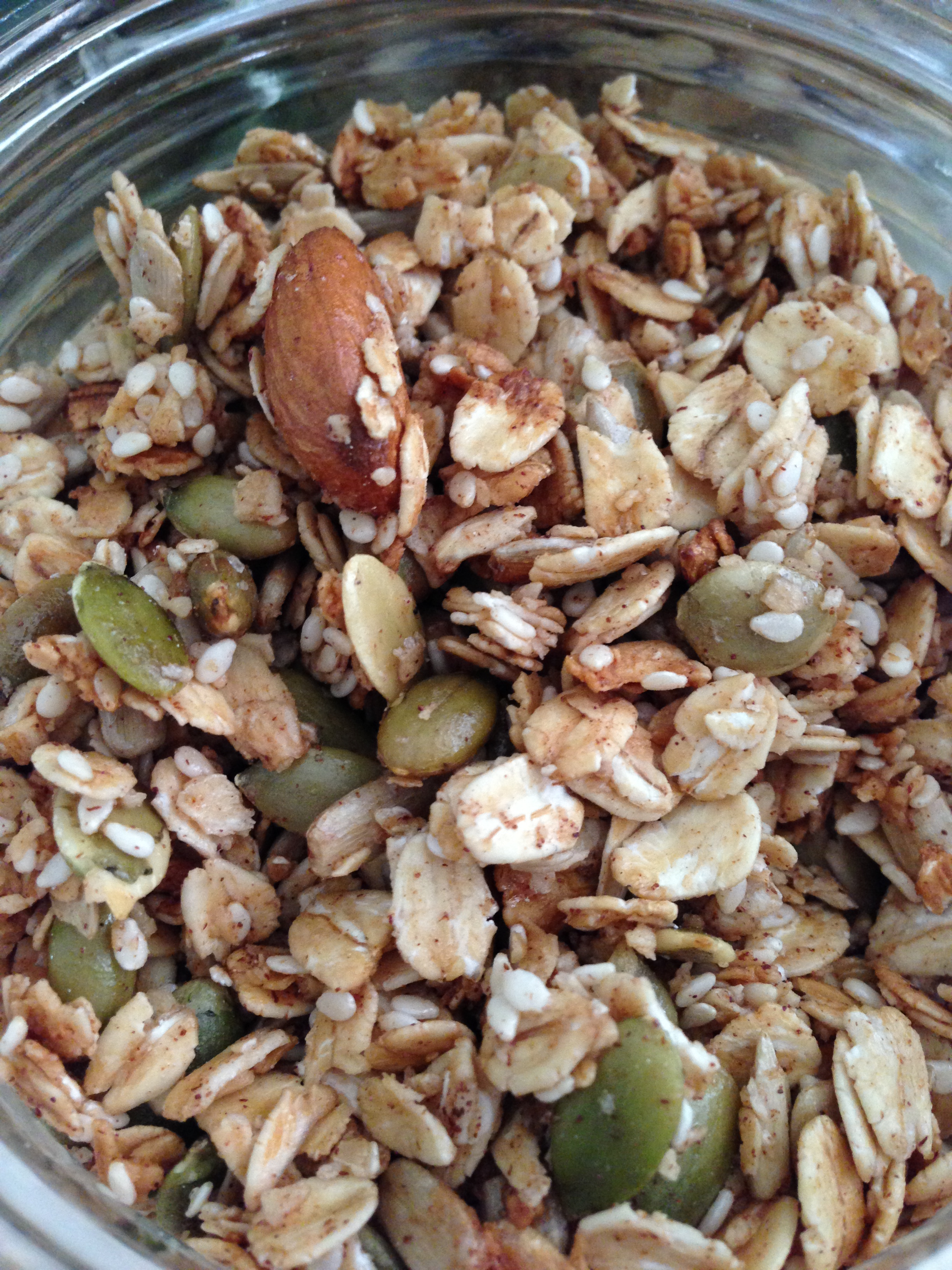
To have a jar filled with toasted grains, nuts and seeds sitting on the countertop, to be scooped from when a nutritious snack is in order, is a wonderful thing.

As our chilly grey mornings have now turned to sunny ones, I’m ready to rest the tight-knit oats and opt for a more scattered breakfast – in the form of granola. Such a simple breakfast it is, with everything seedy and nutty premixed, that all that’s left to do is add the skim milk and you’re away.

The granola in our kitchen really earns its keep, as not only does it provide a breakfast staple, but is regularly topped with yoghurt and a splodge of jam to keep body and soul together between meals. Occasionally it has even been known to be the ‘crumble’ on top of hot stewed apples and passionfruit.

Granola really is a mix of grains, seeds, nuts, spices, dried fruit and a sweetener, and how you put yours together will entirely depend on the sorts of ingredients that meet your approval. Here are mine, feel free to add and subtract as you will (and should you come up with a winner – keep me updated).

6 cups oats
1 cup almonds
1 cup pepitas
1/2 cup sunflower seeds
1/2 cup sesame seeds
2 tsp cinnamon
1/4 tsp salt
1/2 cup maple syrup or honey or rice syrup (depending on the flavor you prefer)

Pre heat the oven to 325 degrees celsius.

Toast sesame seeds gently in a frying pan and cool. Combine oats, nuts and seeds in a large bowl. Mix well. Add the cinnamon and salt and mix through. Warm the syrup or honey in a saucepan so it comes to a pouring consistency and add it to the mix. Turn the granola over thoroughly so that it is all well coated with the sweetener.

Spread the granola over a very large (or two) baking sheets lined with baking paper and place in the oven. Bake for 30 mins, regularly opening the oven and turning the mix so it browns evenly. When it is browned to your liking, remove from the oven and cool before storing in a sealed jar.

recipes

Crisp

The most delicious way to incorporate all food groups into one mouthful, is to take a bite of a crispy homemade pizza. Every thing from rocket to chorizo to feta can be enjoyed on a floury base with undertones of olive oil and fresh herbs. Not only a culinary treat, pizza night at home is a social family experience.

Most nights in our kitchen, meals are individually plated, family members are seated and consumption takes place – rapidly. Pizza night operates differently. Rather than consuming finite meals, a steady stream of food to be shared is delivered to the table, as the oven door opens and closes, receiving fresh ingredients only to dispense them minutes later all sizzling and golden.

In this fashion, dinner stretches across the evening with breaks in between while the recipients wait for the arrival of the next combination of ingredients to arrive  to be sliced and distributed. The cook, aka me, usually dines upright from the kitchen counter, selecting a slice of a passing pizza every so often.

Make your dough in the afternoon and then leave it to its own devices until you are ready to roll later in the day. In terms of your toppings, use creative licence.  Here a few tips to assist:

  1. The baking paper is the key to the ease of the process as it provides the perfect surface to roll the base out on, a sturdy carrier to lift the topped pizza onto the baking tray with and a nice ‘serving plate’ to lay on your chopping board for slicing.
  2. For your tomato sauce see this post.
  3. Add slices of feta or bononcini sparingly rather that large quantities of processed grated cheese – everyone will thank you for this.
  4. Our family favorite toppings include, red onion, baby spinach leaves, rocket,  marinated artichokes, feta, bononcini, olives, prosciutto, chorizo, basil,  and oregano.

5oog of plain flour (or bread/pizza flour if it’s available)
1 tspn salt
7g sachet dried yeast (or 11/2 teaspns)
1 tbspn olive oil
300ml warm water

Combine the flour, salt, yeast and olive oil in a warm bowl. Pour in the water and mix to a soft, sticky dough. Turn out onto a well-floured benchtop and knead for around 10 mins. Dough should be smooth and elastic. Don’t be afraid to sprinkle extra flour on your surface if the dough is sticking. Oil the mixing bowl and put the dough back in. Cover with a teatowel and leave in a warm spot for 1 hour. Dough will have risen and doubled in size. Give it a good punch to deflate it and then leave it for a further 20 minutes.

Preheat oven to 220 degrees celsius and put your pizza trays in so they are heated as well.

Take the dough out and cut into four equal pieces. Tear off a large sheet of non-stick baking paper and roll the first piece of dough out as thinly as possible, stretching it as you roll. Spoon over your tomato sauce and then start building. Lift your pizza by the paper and place on the hot tray and bake in the oven for approximately 15-20 mins. Repeat with your remaining dough pieces,  I usually have two on the go at once to keep up with appetites.

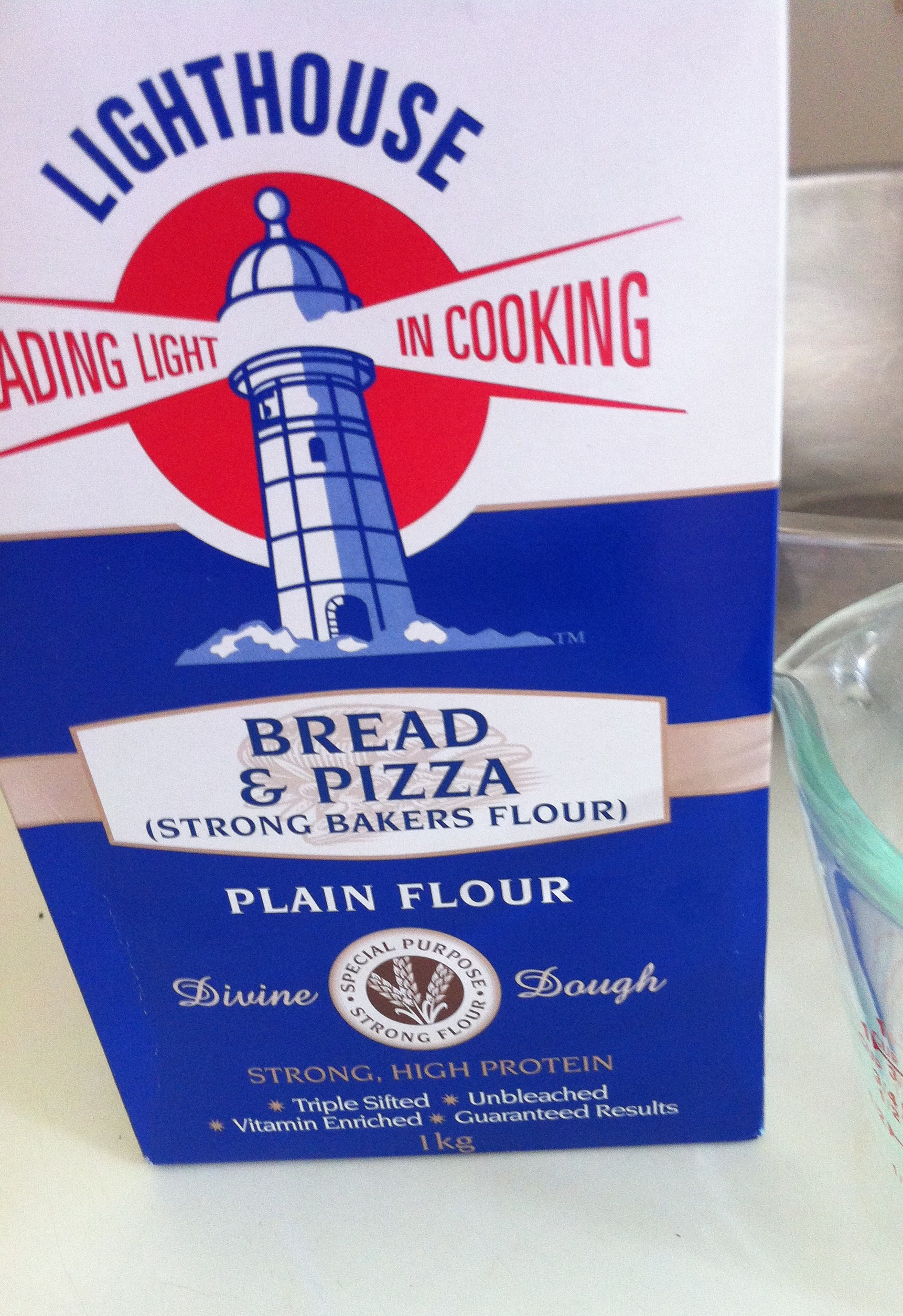
Postscript: Lighthouse Bread & Pizza flour is my go to for dough production, not only because it performs well but largely because I am taken with the box.

book reviews · health and wellbeing · recipes

Rosemary

Rosemary has been an asset to me over the years. Not only for boosting the flavour of many a lamb roast, but also for the most reputable nutritional guidance one could ever hope to receive. The former of course, being the glossy green herb and the latter, Dr Rosemary Stanton OAM, one of Australia’s leading nutritionists.

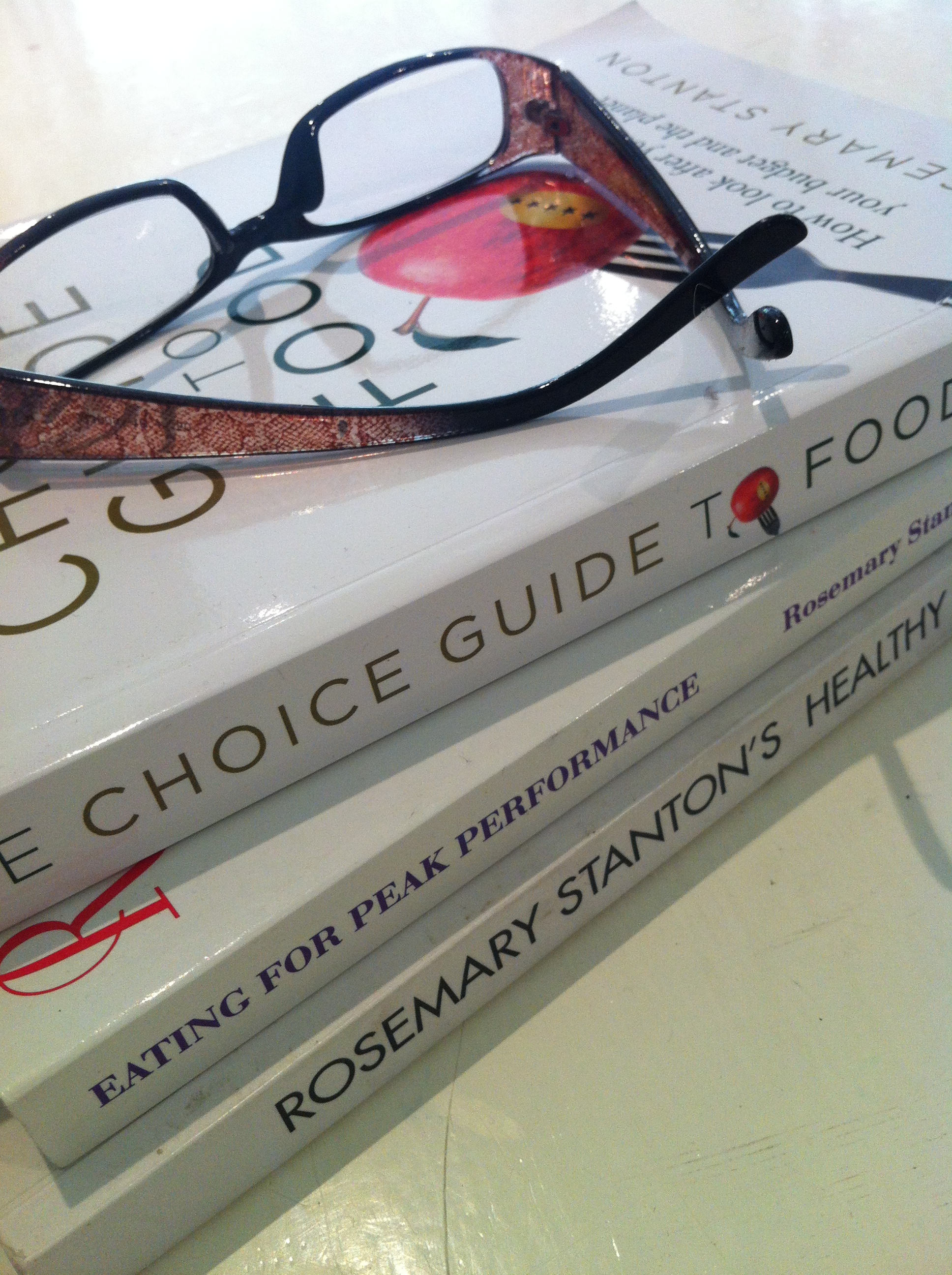
Rosemary Stanton received her OAM (medal of the Order of Australia) for her services to community health. She has dispensed, across the decades, sound evidence-based information regarding food and nutrition, and during sessions of nutritional wagon falls, it is her books I turn to with a cup of lemon balm tea. My advocacy of her work is not solely based on her most recent enlightening book, The Choice Guide to Food, but by virtue of the fact that, dietary recommendations she has made in her early career and over the years, still stand today –  whilst a multitude of other nutritional claims and fads have come and gone.

When a delve into the science of human nutrition is required, we need the information to be delivered in simple terms, so we have the ability to surface with knowledge that is relevant and practical for us to live by. Rosemary’s style of writing supports this. I was thrilled to discover in her latest publication, not only does she cover food from the view of our physical health, but also for that of the health of our budget and  the planet.

To boost your own nutritional wellbeing, incorporate a couple of her recipes into your weekly meal rotation, they can be found in many of her publications or in various pages on the web. Here is her farmhouse soup from which to launch.

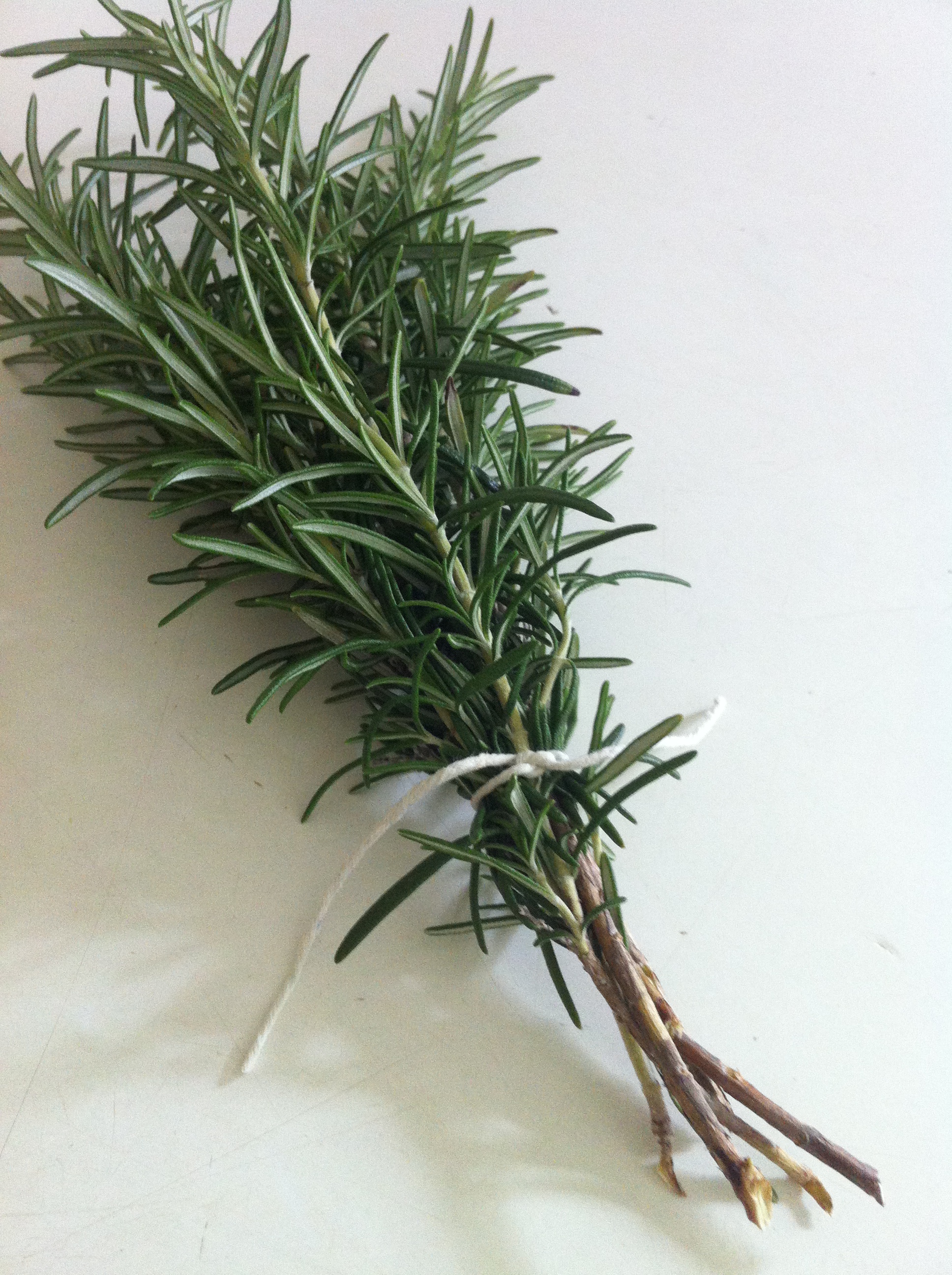
Let’s not overlook, however, the other rosemary who has also done a fine job throughout her career in my kitchen. Scattered over roasted potato wedges, blended through soups and kneaded into bread dough, Rosmarinus officinalis could also qualify for her own medal – for services to our taste buds.

Postscript: this post was written with a salute to Remembrance Day

recipes

Custard

Not sure about you, but anything custardy really takes my fancy.

Vanilla slices, tarts, croissants and buns all plump with custard, beckon whenever I pass a bakery window. Even a simply produced stove top pouring custard can add a whole new dimension to a slice of cake nearing its ‘best before’. Indeed, custard ladled over any pudding gets the thumbs up from me.

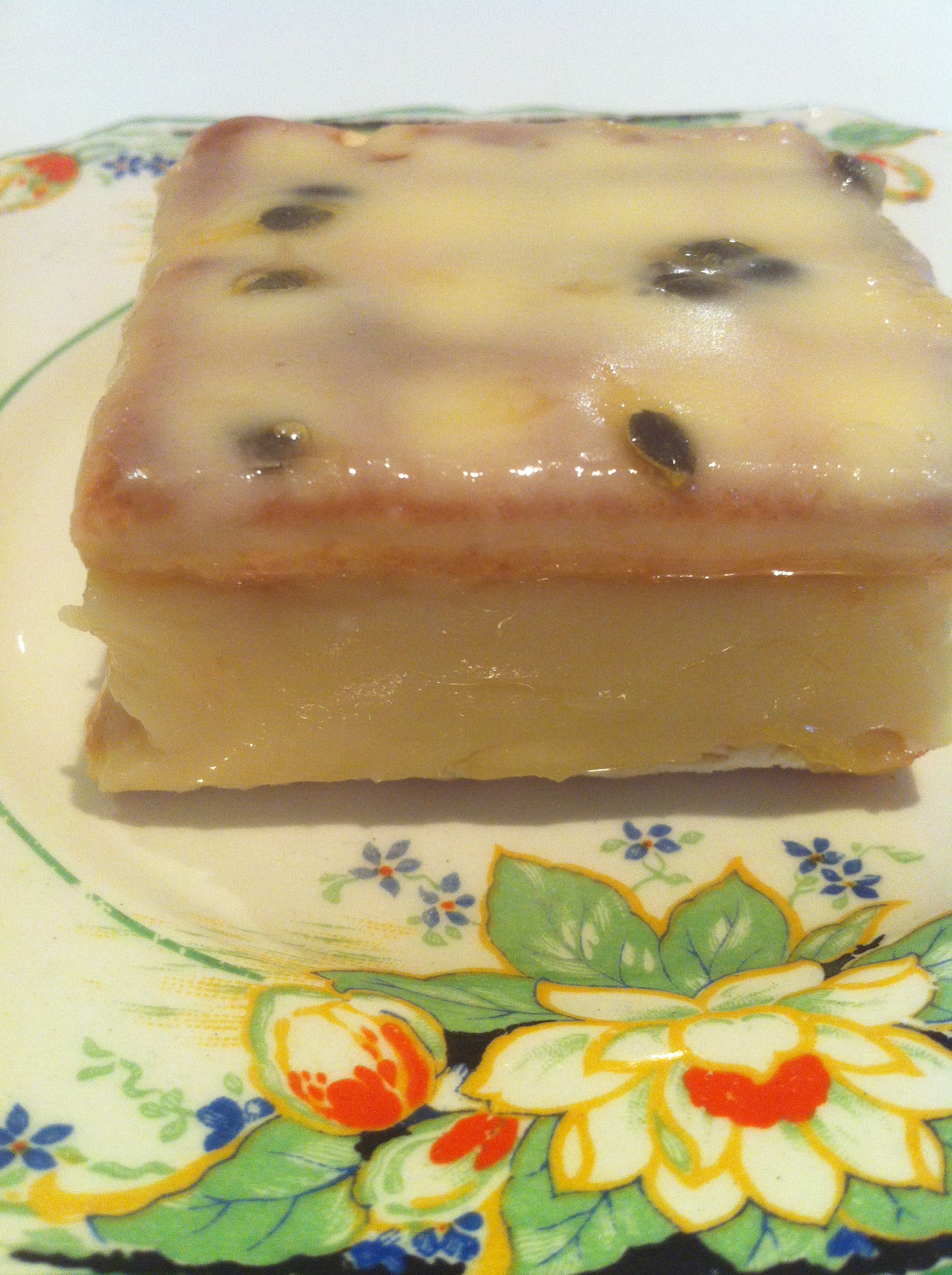
Passionfruit Custard Slice is a true culinary treat – the passionfruit tang harmonises perfectly with the creamy filling. Add to it the nice crisp crunch of the base, and to coin Jamie Oliver, it will brighten up your life.

The foundation of the slice consists of lattice biscuits – not to be confused with the lattice from this post. (Buried in the deep recesses of my memory, I can recall as a child, my auntie serving these biscuits as a dessert smothered in hot stewed rhubarb and cream). Do you have a lattice biscuit memory?

Piled up on your prettiest serving plate, these slices are the perfect accompaniment to rich coffee, warm friends and hot gossip.

1 packet Arnott’s Lattice biscuits
1/3 cup custard powder
2 cups milk
1/4 cup castor sugar
2 cups icing sugar
pulp of 2-3 passionfruit (dependent on how juicy yours are)

  1. Lay 9 biscuits on the base of a tray (in 3×3 rows) lined with baking paper.
  2. In a saucepan, mix custard powder with 1/4 cup of the milk until it is completely blended.
  3. Add the rest of the milk and the sugar and stir over a medium heat until the custard comes to the boil. Reduce heat and cook, stirring for 2 minutes.
  4. Leave custard to cool slightly with plastic wrap over the top to stop skin forming.
  5. Pour warm custard over the biscuits and arrange another 9 biscuit layer over the top.
  6. Refrigerate until set (approx 1 hour).
  7. Sift icing sugar into a bowl and add passionfruit pulp a spoonful at a time, mixing well. Icing needs to be thick rather than runny so it sets well on top. Spread icing over the top biscuit layer and refrigerate until icing has set.
  8. Cut into squares using the shape of the biscuits as your guide. Makes 9

Postscript: …or in bed with a cup of tea and a magazine.